Thursday, May 17, 2007

The Mother of All Days: Pleasing the Woman Who Runs Your Garden

I have to give my kid brother credit. He’s a good boy. Makes his mother proud. And it grassed me no end that he already had her yard raked, plucked, and staked out for planting before the snow was even thinking of leaving my gardens. Of course, mom lives in the banana belt in Anchorage and her garden thinks it’s in Vancouver. But, being shown up by a novice and your kid brother at that? Well. Really. On the upside, the ‘kid’s’ loathe to admit he’s gaining on fifty and pretty soon his rake arm will be handing out twenties to a neighborhood kid to do the annual cleanup. ‘Kid brother’, indeed. Yeah, well, I have to keep him in line somehow.

She doesn't look 86 does she?
I, on the other hand, have the goods. I’ve got Mother’s Day covered in spades this year. Tall cosmos, sunflowers, bachelor buttons, calendulas, dahlias, and lilies are all ready to go in mom’s containers and garden. The ‘kid’ gets to plant them for me. And mom. Sibling rivalry. It’s a good thing.


Looking at the brown mess in the garden I can’t help but wish someone had my Mother’s Day covered. There are still my garden beds to clean up. If I’d done it in the fall I’d be home free, but, the pre-snow winds would have redistributed my soil to the inlet and beyond. At least, that’s my excuse. Usually, there’s just me to do the cleanup of three gardens, pot up stuff in the greenhouse, dig out the over wintered pots from the cold frames, turn the compost, get the greenhouse ready for opening, do the artwork, water, stay sane, water some more, plant some more, rake, stake, and drop. Argh.

Ah, real food ! Thanks, mom.

But, hey, voila! An email from my own ‘good boy’. He’s clearing his calendar, packing his bag, coming home for a week and he’s ready to dig lilacs, divide perennials, and help his mom . . . for Mother’s Day? Right. No, the way you finagle a deal like this is you loan your young adults money. There’s nothing like owing mom and dad to keep your priorities straight when it comes to developing a love of gardening. And you don’t have to buy mom anything for Mother’s Day. You don’t have the money, anyway.


So, what are you doing for Mother’s Day this year? You’ve got all week to think about it. Actually, you’ve only got a week left to get the woman who runs your garden something to keep you out of the dog house. Here are a few tips to stay out of the penalty box:


-Dad, buy her a new rake. But, get one with an attached yard slave. Tie a nice bow around your ten year old and fix his hair.


-Kids, recycle mom’s old hand tools and spray paint the handles day-glo pink. She won’t lose them in the garden anymore. Don’t worry. If she’s not amused you can always blame it on dad.

-Want to get mom out of the house? Why not get her a garden club membership? The Valley Garden Club meets on the first Tuesday of each month (except July) at 10:30 am. Membership costs $20/calendar year. For more information call Jill Parson, 892-0993 or Florene Carney, 376-5390. For those of you in the northern end of the valley there’s North Root Big Lake Gardeners. They’ve got a full calendar of events happening on different days, so for more information call Linda Lockhart at 892-8112. Memberships are $10 per person, $15 per couple or $25 for a family.

-Does your wife throw up her hands in despair at the lumpy lawn and that dead tree you bought her at the hardware store last year? Get her a garden design consultation with a skilled professional from one of the local nurseries. Your garden will thank you and your neighbors will, too.

-Darling. Take your woman out for breakfast and a long leisurely drive, checkbook firmly tucked in your back pocket, and a little mood music on the radio. Then hit the local nurseries that are brimming with colorful plants and toys for your garden. Put a little romance in those flower beds. Think of gardening as a couple’s thing that you do so the woman who runs your weekends will let you watch the playoffs. A little champagne and showing off your skills with a wheelbarrow will do wonders for your relationship.


Remember. Mother’s Day isn’t just a day for mothers. Women think of it as a whole different anniversary than the one you usually forget. You get to shop for the whole Rose bush this time. And don’t forget the chocolates!


Stop in and visit Brooke this month at WoolWood Studio & Gardens up on Lazy Mountain in Palmer. www.woolwood.blogspot.com, 746-3606.


Smart Gardeners Celebrate Earth Day with a Local View

On the drive into town, I’d been thinking about my column for Earth Day. Slowing down to enjoy the morning sunshine I tuned in to the discussion on National Public Radio’s Science Friday (KSKA fm 91.1, April 13) about global warming. Authors Bill McKibben, Deep Economy, and Chris Goodall, How to Live a Low-Carbon Life, had the idea that there was something we as individuals can do to effect positive change that doesn’t rely on waiting for those dinosaurs - politicians and the corporations – to do it for us; unless, like my husband, you’re anticipating beach front property on Lazy Mountain in 2020.

The late E.F. Schumacher, economist and author of Small is Beautiful, would’ve been tickled to hear that we need to start thinking small if we want to change the big picture. Of course, people don’t like change very much; they like to preserve things, to keep things as they remember them. Yet, change is such an elemental part of the universe. A small change can be quite devastating or it can make a whole new world depending on your perspective. Of course, it’s the big changes that get all the media attention and the red carpet into our anxieties about the future and our place in the order of things. The big changes are surprisingly reliant on the incremental effects of small changes, however.

Global warming. Climate change. Call it what you will, it is happening. Even the Governor says so. ‘Isn’t it a natural cycle?’ you say. Yes, some of it is. Maybe a lot of it is. But, it’s the little things that add up that can push nature over the edge. We’re the little things, and we’re pushing as hard as we can. We’re a very successful little critter in the grand scheme of things. We have natural cycles, too. Our civilizations start as tiny villages, grow up to be cities, outgrow the available resources, and then - they crash. Archaeologists and historians have been making a good living off these successful extinctions for years. While change is necessary to growth and success, we are rapidly becoming too successful for our own good.

What’s this got to do with gardening? Both McKibben and Goodall suggest that we need to change to thinking in ‘local’ terms about our economies and daily activities. Goodall points out that a major source of the world’s carbon emissions, the stuff that’s helping climate change along, is produced by the world’s food industry. It takes tremendous amounts of fossil fuels to power farms and make fertilizer to grow our food, to process food, transport and store food, and to transport folks like us driving off to the store to buy all this stuff. Add in the steel and iron used, methane from the dairy industry, carbon dioxide from intensive farming techniques, and you leave a large carbon footprint on the earth.

Interestingly, Goodall notes that you produce less carbon if you drive your car to the market to buy a bag of locally grown organic carrots than you would if you walked to the same store to buy a granola bar bought from a California-based company.

What can you do? Buy local whenever possible, which means supporting our local farmers and nurseries. Are your local nurseries growing their own plants from seeds, cuttings and divisions, or tiny plugs; the smallest units they can ship in? Big box stores ship in weighty pots of ‘retail ready’ plants that are part of the larger carbon emissions problem. And, while these plants are cheaper than those from smaller nurseries, they are often poorly cared for with poor survival rates. Local organic farmers use no fossil fuel-based fertilizers that could otherwise taint our streams, lakes, and coastal waters through rainfall runoff; a major cause of algae which feeds the coastal red tides making local clams and shellfish toxic.

So, grow your own food, go fishing, mow the lawn less, use a rake instead of a blower, or ask your local power company to look into green options for electrical generation, these are little changes we can make. Check out www.LowCarbonLife.net for some good information on reasonable changes you can make to mitigate global warming. I’m sending KSKA a check so I can keep listening to Science Friday. Maybe send a ‘thank you’ note to Governor Palin, for her new sub cabinet to study the effects of global warming in Alaska. Be a smart gardener and get active for your community when you’re not down on your knees pulling weeds!

Brooke

Saturday, April 14, 2007

How to Get a Nicotiana Fix and Stop Smoking

Weeding out tobacco addicts is all the rage these days.Smokers are having their habits restricted in cities all overthe world. Even the French are regulating this most iconic symbol of the Paris café. I smell regime change in the air. But, pitchforks aside, as these crusades go, we tend to lose sight of the significance of the plant behind the story. Tobacco, the first major export from the New World, formed the backbone of colonial American agriculture. From this rugged Native American plant has come many beautiful and fragrant bedding flowers, a highly effective insecticide, a major tax source, and a world-wide addiction industry.


Nicotine is named after Jean Nicot, the consul of the King ofFrance, who introduced tobacco to Paris in 1560 to promote its medicinal use. It was the alkaloid, nicotine, a highly addictive chemical attracted to the brain’s pleasure centers that made this plant the new ‘New’ in agriculture and European society. Nicotine is an alkaloid found in the deadly nightshade family of plants. It is an aptly named group, but, one that includes such family favorites as potatoes, tomatoes, eggplants, green peppers, and petunias. These alkaloids are also found in the leaves of the coca plant, a South American native, which forms the backbone of the cocaine industry. Both nicotine and cocaine have their medicinal benefits, but, you’ll have to go to the library to read up on that one. It would seem that humans are continually searching for ways to abuse their systems with vegetable matter. Of course, it would be equally harmful if we were to be fixated on potato chips and popcorn.

Tobacco is a beautiful plant that not only packs a wallop to your central nervous system; it is one of the few poisons insects have not evolved a resistance to. Nicotine is a very effective defense for the tobacco plant. I’ve seen clusters of dead gnats stuck to the sticky and fuzzed surfaces of the enormous leaves of my five foot tall specimens of Nicotiana sylvestris, a lovely white flowered evening-scented ornamental annual. Remember the word ‘neurotoxin’ next time you want to fall off the wagon and light up. Pretend you’re an aphid. Rumor has it a florist once sat on a chair that had some nicotine insecticide spilled on it and lapsed into a coma for a couple of days! Nicotine insecticides can kill you as well as those bugs on your roses. As in the transdermal nicotine patch, the insecticide also passes into the blood stream via contact with your skin, so, wear gloves while using it and a respirator. Some organic gardeners make insecticidal sprays from tomato leaves, tobacco’s cousin, which they grind up and soak in water. Ironically, you cannot use tobacco products around tomatoes or other nightshade cousins or you may spread the Tobacco Mosaic Virus. For those of you who abhor tomatoes I recommend TomatoesAreEvil.com for a good laugh.

After reading Kevin Bourzac’s Nicotine I am amazed that we haven’t outlawed the growing of Nicotiana in the home garden. The government has regulated the sales of the popular annual Papaver somniferum making it difficult to find seeds of many garden varieties. Opium poppies. Those poppy seeds in the bulk bin at the grocery store are Papaver somniferum, or renamed ‘bread seed poppies,’ and have a low level of opiates in them. And those gorgeous blood red poppies with the lush blue green foliage that we all love. Well, you get the idea. Ah, the vagaries of law enforcement when confronted by the adventurous gardener. I hope we don’t protect ourselves to the point that we’ll be stocking our garden beds with everlasting plastic flowers. Even the pink garden flamingo is thankfully extinct now!


N. langsdorfii

Fight the garden nannies and start some Nicotiana before it’s too late. You won’t regret it. They’re easy to grow and come in sizes to fit any garden. Huge, tropical, and lush, the Nicotiana varieties langsdorfii, sylvestris and alata have white and green flowers that perfume the evening garden. With heights ranging from three to five feet, two of these plants will take up a space big enough for a bathtub. Tobacco seeds like N. Tabacum, the South American native and N. rustica, the North American ‘Indian’ or ‘Wild’ varieties, or the variegatum, a variegated plant with huge leaves splashed with cream can be found at Solana Seeds and J. L. Hudson's Seeds. They’re the real thing, but, just enjoy growing and looking at them because they’re beautiful and exotic. Then go smoke some salmon, instead!


Thanks to Solana Seeds in Quebec, Canada for

sharing their lovely photos of variegated Tobacco with our blog. The photo of N. langsdorfii was graciously loaned by Chiltern's Seeds in England. Bev Wagar's lovely photo of pink Cleome and N. sylvestris is from her garden in Ontario. Be sure to drop in on her website for some cold hardy garden information. If you have any photos of Nicotiana you'd like to share please drop me a line
at woolwood@chugach.net and we'll try and upload them into this article.

Happy gardening,

Brooke.

Tuesday, April 10, 2007

Happy Spring . . . No More Snow ! Ha Ha !

DD Two is out of hibernation and picking green plant materials out of her ears! Hello, dears. Yes, I'm back. And I'm up to my ears in little green growing things in the greenhouse. It is sooo nice not to have to shovel snow anymore, isn't it? To heck with sunscreen! I just want to fluff up my pineal gland and make like a lizard in the sun. Even the mud looks good these days.

Believe me, it beats working on my computer and trying to figure out what ails it. Maybe a nice dose of 'If you don't start working right, I'm going to take you to the dump,' might do the trick. Ah, technology. I yearn for simpler days . . . right. Like I want to spend hours at the library and days waiting for a book loan to come through! Okay. The computer can stay. Anyway, I'm going to start uploading some of this spring's columns, so, hold on to your seats . . .

Biennials - Garden Divas Worth Waiting For

Last week, my Irish cousin Sue, emailed me some old black and white photos of my father’s family. They were black and white, but, the memories they evoked were all in color. The huge blue green hydrangeas with orange tiger lilies leap frogging through them, and the neat clipped privet edging in a tiny knot garden were grandma’s little bit of England in the middle of Milford, Connecticut. Growing up in Miami, I was used to huge blowsy hibiscus hedges, mangoes dripping from trees, and white and mauve orchid-like flowers in banyan trees where we climbed like monkeys and chased after chameleons. A tropical paradise I took for granted, for all I wanted were the cool weather gardens of the English persuasion. Ah, youth. Now all I want is for spring to change winter’s coat for something in a lime green, neat, no rocks.

English biennial Forget-me-not 'Ultramarine'

While our zone three gardens grow tall stately delphiniums, bell-flowered campanulas, and blue poppies that any English gardener would kill for, the true stars of the cottage gardens are the ones we rarely grow anymore - the old-fashioned biennials. Patience is required for the full effect of these divas as they only give us a peek at their wares in the first year of growth. Hollyhocks have huge crinolines of round velvet leaves that tower over the Sweet Williams and Forget-me-nots with their neat mounds of green flushed with bronze. English daisies make prim rosettes of shiny green almost good enough to eat. And Angelica gigas taunts with her bold voluptuous divided leaves of deep green and maroon. Teases, the lot of them. Think of them as the salad before the entree.

Black Hollyhock with Sunflower and Sweet Peas.

The real show is worth the wait. With tall spikes of hibiscus-like flowers from white, pink, and rose to peach, yellow, and near black, the hollyhocks make a great foil for campanulas, geraniums, annual poppies, bachelor buttons, cosmos, and Nicotiana. My black hollyhock looked marvelous paired with a gold Provencal sunflower threaded through with a pink-white sweet pea. The bumblebees loved it, too. Their large seed heads look like cheese wheels and are easy to dry and save.

Many biennials are just perennials that need a new set of threads by year three. Fortunately, they produce lots of seed so they tend to naturalize or ‘volunteer’ in your garden so they’ll always be with you. Some of them are quite promiscuous and cross with themselves and their near cousins to make new colors and sometimes whole new varieties. Pansies and violas do that. What was once a black viola is now a black wine viola with yellow speckles knee deep in the pavers. Some of them are rather large, so I know there’s a pansy lurking in the DNA.

Sweet Williams 'Purple Oeschberg' and 'Dunnetti's Crimson'
with Lady's Mantle and Campanulas

My first Sweet Williams were planted firmly in the middle of my eighth birthday cake. They were the hit of the party. Mom and I drove down Dixie Highway to the local flower nursery and I picked out the most Englishy looking flowers they had. Mmm, they smelled just like cloves and allspice. They were perfect in the middle of a vanilla tube cake with real butter cream frosting. No cans. No boxes. Just the real cake ma’am. Sweet Williams are still my favorite flower. There’s nothing like their lush mounds of deep wine red and rich violet flowers set among the acid green clouds of Lady’s Mantle to light up the early summer garden. They are nature’s perfect cut flowers and perfume the garden all summer long.

Biennials are hard to find in nurseries these days since customers tend to only buy plants that are already in bloom. But, they are very easy to grow from seed. If you can baby them through the vagaries of an Alaskan winter, they’ll reward you with a show that’ll knock your socks off. The trick is convincing them to stay the winter. Hollyhocks have deep tap roots that freeze out if the soil’s too heavy and wet. You need to know the idiosyncrasies of your garden - is it protected with sufficient snow cover and well-drained? Give first year biennials a warm sunny spot and plump up the bed with plenty of compost, alfalfa meal, and bone meal so they’ll have lots of foliage and a nice healthy set of roots before winter sets in.

So, build a little mystery and suspense into your gardening scheme and try some biennials this year. There’s plenty of time to start some seeds before summer gets here. What do you know? It’s snowing again!

Monday, February 19, 2007

Design and the Paralysis of Choice

DD One
This is the time of year we gardeners are supposed to sit back and happily finish our plans for summer activities. We’ve made drawing, plans and lists. We’ve looked at glossy magazines until our eyes burn. Now we’re planting our dream seeds and resting our bodies for the onslot of summer activity. But wait! Why do I feel so tired?

Perhaps, its because my reality is something closer to a state of anxious obsession. For starters, those restful activities really don’t provide me a lot of rest. Instead they fill me with longing, anxiety, and angst. Talk about over planning! In my manic mind I can do it all – not a limit in sight! Until spring hits, that is. The problem now, of course, is that spring is growing closer and I am beginning to see the cracks in my over ambition. When was I going to dig up that perennial bed? Oh that’s right, at 4 am one morning when I have nothing else to do. Therein lies the true reason for all the winter knitting - just working off that neurotic energy. It looks so innocent, doesn’t it? Even a simple design like the garden entrance shown above requires a considerable amount of yarn working to get right.

Fortunately, this time of year, I am often saved from the brink of a complete and total planning breakdown by people calling about their own garden designs. As it turns out I can pull unsuspecting clients into this gardening frenzy as well – how fun! So I march forth to spread the disease as best I can. But seriously, It brings me special pleasure to help earnest clients make pleasing, and hopefully reasonable, decisions about where to place trees, shrubs and apple trees; to mull over, with them, the perfect spot for a perennial bed; a berry patch or an herb border; to solve complicated drainage and wind problems and choose the perfect place to place a pond or a staircase, like that shown here. The is part of a large project that took weeks to concieve and several months to complete. The chances for paralysis were many! It is a myth to believe that I know what I’m doing all the time, but I do enjoy doing it, wherever it leads.

So before you have some lolly-headed designer come and make sense of your gardening woes, turn to other resources. Books are what I have in mind. They are a heck of a deal if you compare them to a living designer, and will loop you right back into garden fury without ever leaving the couch.

But first this. Curt Mueller, a friend, fellow gardener, and a great plants man, recommended the following sites and asked that I pass them on to you for the valuable information on germination they provide. I checked them out, and he’s right, of course. Here they are:
www.onrockgarden.com and www.backyardgardener.com. Thanks, Curt!

Now for some hard-cover therapy. Classic Garden Plans by David Stuart is a fairly new book of pre-designed gardens. Its advertisement touts it as being “… invaluable to any gardener who wants to design a garden with powerful historical associations, ...” It has great information on how to adapt classic designs into limited spaces and even gives you detailed shopping lists to carry out the plans.

Along the same lines, with pre-designed gardens in varying degrees are; Theme Gardens by Barbara Damrosch, Shortcuts to Great Gardens by Nigel Colborn, Rosemary Verey’s Garden Plans by Rosemary Verey, The Impressionest Garden by Derek Fell and Penelope Hobhouse’s Garden Designs by Penelope Hobhouse. Each of these books has its own take on good quality designs, and grouped, they are a virtual feast for the eyes and hours of fuel for the frenzy! Chucked full of lovely drawings and photos, these books are a collective treasure trove of valuable plant information and design hints on color, form, texture and problem solving. I could go on and on – I do read when I’m not knitting, you know. Well, actually, sometimes when I am knitting. Oops! There’s that neurosis again! If I must be honest, sometimes I draw while I'm knitting (don't ask). I like simple plans, such as this one, which focus in on one or two areas of the yard at a time. Leaving some areas as only ideas allows the opportunity for more drawing later, thus more ideas.

At any rate, suffice to say that there’s a splendid pile of new books on the floor in front of the bookshelf – they seem to grow faster than I can read – or knit. I’ll let you know what I think of them later, but for now I’ll leave you with this thought for spring: no matter how much you plan, there is no such thing as a perfect garden. Those who fall captive to the paralysis of design perfection find themselves unable to turn the earth in the spring. For heaven sakes! Just get on with it! The only thing you’ll regret later is that you didn’t do it sooner.

Saturday, February 03, 2007

For the Love of Ferns! (and killer moths)

DD One
There are over 12,000 named varieties of ferns world wide. As a hobby, ferns could keep a person busy for a lifetime. Or perhaps you just want something to scare the burglars away. I think one of the Platyceriums – the giant stag horn or elk horn ferns - would fit the bill. Hang it in the entry and make sure it is faintly silhouetted at night. In the darkness it would surely look like a giant man-eating moth and put fear in the most hardened heart. Remember, only you know it’s just a fern!

But burglars aside, ferns are not just so much fluff on a pedestal. They come in an impressive variety of color, shape, size, texture and even scent! Take, for example, Nephrodium fragrans. It is, at first glance, just a green fern with fairly short fronds. Stroke its leaves, however, and you’ll be in love. It has a sweet scent, something akin to violets or soft roses.

Ferns range from the graceful to the bizarre. Some look more like aliens than plants, with weird spiky arms and tentacles. They are lacy, frilly, tufted, spiked and puffed. Their colors range from pink to cream, striped to mottled, variegated, maroon to blue and silver to gold. The individual fronds can look like hearts, coins, leaf lettuce, hands, tongues, fingers and toes. Some plants are shaggy, some look like moss. They creep, climb, grow in rocks, in full sun, in the dark, on rotten wood, in bogs, in high humidity, in dry air and in water. The Sheild Fern, shown above, grows on a mountain side in Seward, Alaska. It's growing on a lump of compost and moss at the edge of a small cave in a hillside made of solid rock. The 'tree' to its left is actually a giant root from a tree growing far above.

The Doodia spp. are short ferns of around 15 inches with dark pinkish red new fronds, turning to dark green when mature. Lygodium palmatum, the ‘American Climbing Fern’ is really gorgeous! It’s a vine with finger-like under leaves and frilly upper leaves and has the distinction of being the first plant in the US to be put on an endangered list in the 1860’s. It is available commercially from selected fern nurseries, but make sure they are legitimate and have permits to grow it. Also make sure you know what you are getting. It’s cousin, Laygodium microphyllum – the ‘Old World Climbing Fern’ has run rampid throughout Florida and is considered one of the most destructive invasive plants in the US, suffocating acres of natural landscape in its wake.

In the mean time, back in your budding fernery, don’t over look these guys. Hymenophyllum tunbrigense , one of the so called ‘Filmy Ferns’ has leaves that are nearly translucent. It’s incredible growing out of hanging balls of damp moss with the light casting a greenish glow through its fronds. The photo of P. Tunbrigense here is from John Crellin whoes spectacular photos can be seem at www.floralimages.co.uk .


Pyhllitis scolopendrium is an upright fern that looks like a cluster of lizards tongues shooting from underground; complete with curled ends. A native of Hawaii, Trichomanes reniforme looks sort of like a collection of climbing, dark green calla lily flowers. Hymenophylllum australe and H. flabbelatum both like to grow upside down, and lend themselves well to hanging baskets or mossy frames hanging from the ceiling. They are breathtaking in a colony, but need to be kept constantly damp, so are perhaps not for beginners.

Look for a Petris tri-colour. An attractive fern with bright red new growth that changes to bronze and eventually dark green. The mid veins remain red even in maturity. Finally, not to be overlooked are the ‘Lady Ferns’; in fact there are over 200 of them with a wide range of color, size and shape. A nice one to try is Macrophyllum ‘Strawberries and Cream’. It boasts bright pink new fronds on a nearly lime green background and is an impressive 22 inches tall.

One more thing. Growing ferns gives you a great excuse to buy more books! After all, you need to research your new hobby. Books on ferns abound, but not all are that great. Although pricey, the Fern Grower’s Manual by Barbara Joe Hoshizaki and Robbin C. Moran is one I go back to time and time again. Both useful and comprehensive, it provides detailed advice on almost every aspect of these wonderful plants. It costs around 60.00, but is worth every penny! Another great source is Choice Ferns for Amateurs: Their Culture and Management in the Open and Under Glass by, George Schneider. This is an old book that is out of print, but I did a google search and found it online for around 20.00.

Saturday, January 20, 2007

New Year’s Resolutions Aren’t Written in Snow!


DD Two

Whew! There’s nothing like working off holiday food stuffs by digging yourself out of the New Year snow drifts brought to us annually by the comedy team at Mother Nature. Is that a run-on sentence? Who cares? I’m still trying to get my breath back and think straight after tossing chunks of concrete disguised as snow off my driveway. Actually, half of my driveway is now a legal road. So, it’s about a tenth of a mile long. Get my drift?

The end of the year has a way of highlighting all of our flaws and fears. You know, like, ‘I need to lose about 20 pounds!’ and ‘I really need to get to the gym more often’ and ‘I hope I can get in shape for gardening next spring.’ Yeah, the usual backsliding whining about stuff we should be doing on a regular basis, but, find a myriad of excuses not to do. We really ought to be resolving to have more actual resolve in the new year. So, even though I really loathe those seasonally correct garden columns about what we’re all going to resolve to do next year, I took a look to see what I lectured our dear readers to do last year.

Make a compost heap. Heck, I didn’t even have time to turn mine, let alone use it! I just kept piling on the waste. True compost takes time. It needs to age. Keep telling yourself that and you can live with it till spring.

Keep a garden journal. That’s an easy one. ‘Get my husband to do more weeding, raise the lawn mower higher, get him a nice luxury style kneeling pad.’ I kept my journal up to snuff with little or no problems.

Take photos of the garden all year long. Hmm. I didn’t do so well on that one. It’s kind of hard to take pictures in a driving rain in June, July, and August. Did we actually have a gardening season this year?

Buy Alaska Grown nursery plants. Did you see those dead hanging baskets at the big boxes last May? Do you ever see plants like that at your neighborhood nursery? Of course not! Can you ask intelligent questions and get an intelligent answer from your local nursery? Do their plants usually survive the winter better than those beaters you buy at Mall Mart? Just say ‘Yes!’ and we’ll let you off the hook.

I guess I have to keep these on my list of New Year’s resolutions for 2007 again. But, I know I’ll be encouraging gardeners to add the following resolutions as well:

Get in better physical shape! Boy, is your back ever your friend? You betcha! If you can’t see your belt buckle or your knees when you look south, you will pay dearly come spring. Those muscles that hold up your back are holding up that front end as well. Extra weight puts a lot of stress on your knees, hips, and lower back and increases the risk of osteoarthritis while wearing away the cartilage that protects these joints. So, get those boots on and get out the door and walk, talk, walk, and shovel snow or something. Join a gym if you can because it’s awful hard to fake a workout while others are watching! Nobody goes to the gym and quits after fifteen minutes. So, work out with a buddy or a group of friends. Your gardening will be less of a chore and you’ll be able to enjoy the fruits of your labor without laboring to bend over. You’ll live longer and be happier as well. I know my back feels a lot better when I work out regularly. Now, if I could just stop eating. . . .

Go to the Alaska Botanical Gardens Fair in June. You’ll see lots’ of folks from the Valley there and you’ll have a good time and see beautiful plants, art, hear great music, eat, buy plants, eat, walk through the woods, eat. (Is it lunch time yet?)

Go to the Blue Poppy Garden Walk, Les Brake’s Coyote Garden Tour, and the 3rd annual Art and Garden Festival at the fair grounds in July. Keep an eye out for the garden calendars or check our blog for the dates on these Valley fairs. There are so many beautiful plants, art, and things to eat at these events that you won’t want to miss them!

So, are we resolved enough for next year? I for one, resolve to eat lunch now and shovel snow later. Happy New Year!

Friday, January 19, 2007

Musings from the Outhouse Garden


DD One

There’s nothing like the cold shock of that first contact with an outhouse toilet seat at twenty below to make one’s mind turn to gardening! The thing is, if your mind is not in its ‘happy place’ it could be a different experience altogether.

I don’t suppose one should admit that they use an outdoor privy, but sometimes that’s the way it goes. We live in my grandmother’s home – it is small, with plumbing designed for one little old lady. The septic moans and protests on a regular basis as it struggles to keep up with four times its designed load. The result is a periodic revolt, usually in the middle of the winter when the temperatures are the least outhouse friendly. It is during these times that we are blessed with the walk to the outhouse.

The facility is located on a ridge behind the house, and the walk takes several minutes. The path goes up a small hill, across a little clearing and into a small forest. Here it winds a bit as it dips down then up another small incline to its final goal. This miniature forest is my favorite spot on our property. The trees are tall and well spaced, the under story lovely. It’s not a man-made garden, but a garden none-the-less - naturescaping at its best.

Mixed with the Birch (Betula papyrifera Var.humilis) and Spruce (Picea glauca) are two members of the Populus family: White Poplar (Populus balsamifera) and Black Cottonwood (Populus trichocarpa). From the privy door the odd Mt. Ash (Sorbus sitchensis) can be seen, though their berries have long been striped by Grosbeaks and marauding Bohemian Waxwings. Under the heavy snow fall I can just make out various shrubs: High Bush Cranberry (Vivernum edule), Labrador Tea (Ledum groenlandicum), Prickly Rose (Rosa acicularis) and an occational Red Osier Dogwood (Cornus stolonifera). Out of my view, just over the edge of the hill I know there is a beautiful stand of Devils Club (Echinopanax horridus). It is magnificent in the spring as the giant leaf buds pop out of the bare prickly stems, changing them from gruesome into something glorious almost overnight. Later when the thicket has become impermeable, the red berries glow against the huge leaves, contrasting with the rest of the woods in their tropical beauty.

Although I can’t see them, I know the snow conceals Red Currant (Ribes triste) and a pallet of mosses, lichens and evergreen Lingenberry (Vaccinium vitis idaea). Further down, dormant now beneath the ground, are perennial plants such as Twin Flower (Linnaea borealis), Monkshood (Aconitum delphinifolium), Bluebells (Mertensia paniculata), Alaskan Violet (Viola langsdorfi), Cranesbill (Geranium erianthum), Baneberry (Actaea rubra), Angelica (Angelica genuflexa), Creeping Bedstraw (Galium triflorum), Ground Dogwood (Cornus Canadensis), Watermelon Berry (Streptopus amplexifolius), Oak Fern (Gymnocarpium dryopteris) and the semi-evergreen Timberberry (Geocaulon lividum) and Wintergreen (Pyrola asarifolia).

The path just outside the door follows downward through a thick patch of Club Moss (Lycopdium annotinum) as it works its way between trees, its bright arms poking out here and there as a reminder of its evergreen tenacity.

Why all this outhouse drivel? I receive frequent questions about Naturescaping. "How do you design natural plantings, how do you choose your plants, how do you know what likes to grow where, what wants tending, what doesn’t?” The answer is simple. I visit the outhouse.

The answer is also complex. To get it right you need to study the directions of the sun, the wind, the snow buildup, the drainage, and the moss growing on the trees. You need to notice when things bloom, when they fruit, when mushrooms emerge and when they melt into piles of slime filling the woods with their own distinctive musky odor. You need to be aware of details such as what grows next to what, which moss is happy on decayed wood and which is happy on stone. What embraces traffic and what shrinks from it? Observe through an entire year of seasons; take notes, and photos. And if you’re really serious about a natural garden, give me a call. I’ll let you visit the little house. I promise you won’t be disappointed. Don’t forget to check out the Outhouse Garden photos in the album to the right! Enjoy!

Sunday, January 14, 2007

Applesauce! Oh Applesauce!

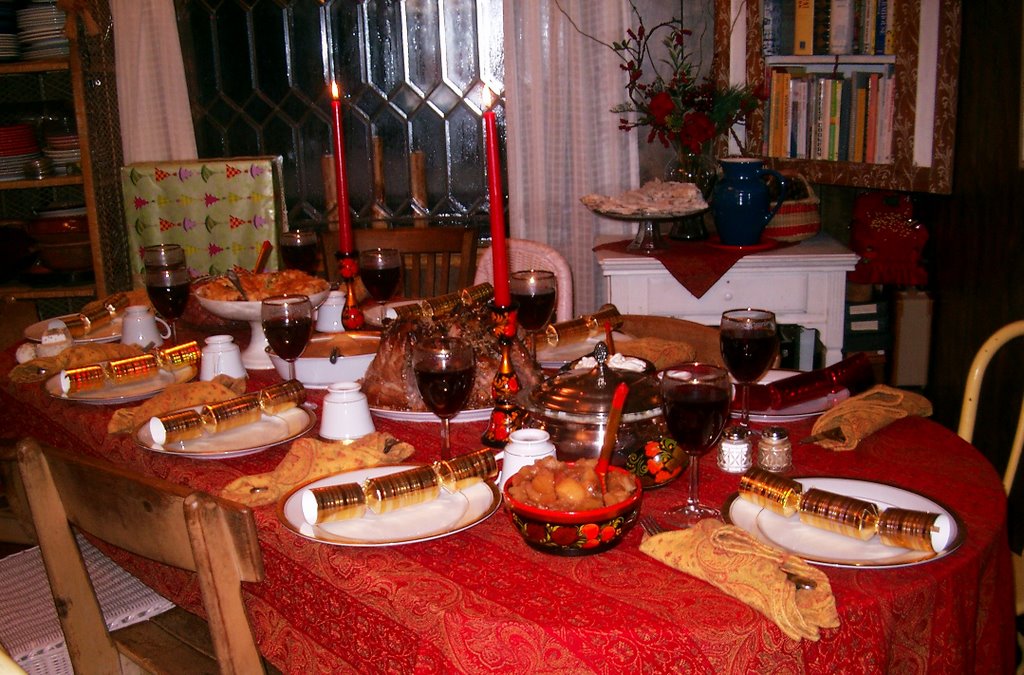
For me, winters are incomplete with out fresh apple sauce. Actually, we make it all year round. It goes without saying that made in the fall out of fresh apples plucked from our trees, gives us the tastiest brew. If fact, if the harvest is good, I can usually make the season last till Christmas by freezing those that do not store. For the rest of the year, organic apples from the store make a fine substitute. The recipe below is for an even mixture of red and green apples, but I prefer to mix several varieties together. We grow five varieties that bear well, which thrown together, produce spectacular flavor. The joy is not just in the tasting, but in the making of this delicious treat. The smell of apples and spices floating on the air is an aphrodisiac to the senses. Served hot or cold it satisfies the appetite for festive fare and is as easy to make as it is to eat. Here is Christmas Eve dinner with applesauce taking its rightfull place of honor in the foreground.

Winter Apple Sauce (or fall or spring or summer)

Core unpealed apples and chop into bit-sized pieces - not too small. Use half red apples and half tart green apples. DO NOT use red or golden delicious. These are nice to look at, but are nasty to eat. They lack the flavor, vitality and body that it takes to make a good apple for sauce (not to mention anything else! They are just sort of nasty all the way around...) Put the apples in a sauce pan on low heat; add some sugar and a mixture of mulling spices. Put the spices in a cloth bag so they can be removed after a couple of hours or the sauce will become bitter. Simmer until the red apples are beginning to fall apart. DON'T FORGET TO REMOVE THE SPICE BAG AFTER TWO HOURS! The green apples should still be firm, but cooked. What you are looking for is a sauce that is half chunky and half soft. You now have the perfect food! This is not a soft, mushy sauce like that which comes in a can, but rather a full bodied, real food.

Saturday, January 13, 2007

Beginnings Born from Loss

DD ONE

For Readers: an apology.

What’s been keeping us offline? Michael finally lost his battle with skin cancer on Dec. 14. (See posting on Nov. 12 “Gardeners Take Care of Their Own”). He was a fun, funny, cantankerous Welshman and is painfully missed. Some of his ashes have gone home to Wales to be cast upon the mountains he loved. The remainder will be spread here in his adopted home with the family he wished not to leave. Michael was more than a fellow gardener to me, he was also my brother-in-law and his death has left a deep void in my extended family. We have been compensating with lots of days and nights spent together knitting, crocheting, playing games and visiting.

From loss is often born new beginnings, even from the most devastating loss. In a strange way, Michael’s death has birthed one such beginning. My sister and her girls, myself, my Mother and my son have started to felt. We call ourselves the Fat Felters, comically suggested by my Mother and immediately pounced upon by the rest of us. In the photo above I am in the forefront, my sister, Hally, in the back. You can see why we loved this handle! It will be our winter passion, our therapy, our healing hands. It will lend in pulling us through this difficult year of transition and help bring us out the other side whole again. It is a wonderfully comforting thing to do when one’s heart is sad, there is three feet of snow outside and the temperatures are in the negative teens.

Monday, November 27, 2006

Oganic beauty good enough to eat


DD One

A number of years ago, I saw a picture in a magazine of an outdoor table set for lunch. It was completely covered in deep moss from the woods with pots of daffodils nestled into the moss at the center. It looked very organic and I imagined it smelled of that wonderful earthy-musk that wafts up when you mess about in the woods on a damp day. It was beautiful; all green and soft. The place settings were also nestled in making it look like it was set for a feast for woods fairies.

But it’s winter here and pretty cold at the moment. I’m afraid a mossy table will not be our lot for this holiday season. Do not despair! Along with poinsettias, garlands and Christmas cactus, much can be done to bring the beauty of growing things to our holiday festivities.

Artichokes or pomegranates, for example, make fabulous candle holders! Both of these are rich in texture and color. Use an apple corer to make a hole in the top about 1 ¼ inches deep. The Pomegranates can be placed directly on the table but you’ll have to cut off the bottom of the artichokes to make them sit flat, so they will have to rest on little plates to protect the cloth or table.

A four inch container of wheat grass can also be magical. Remove the planted grass from its plastic growing pot (it will be all root), shove it into a four inch terra/cotta pot and place a candle in the middle. Simple beauty at it’s best! Try serving kabobs or other squired hors d’oeuvres poked into these pots of grass; it’s a lovely presentation. If you’re inclined, you can even grow your own for almost nothing. Plant wheat seed very thickly in a pot about one month before an event. Keep in the window or under a grow light. It’s best to use at about 3 inches high.

Napkins look elegant tied up in a bit of raffia or satin ribbon, with a tiny birch or spruce sprig tucked under the tie. Holly sprigs, rosemary and other herbs work as well, as do any number of small peppers. But don't use anything poisonous! All-in-all, a nasty thing to put on the table! If you use place setting cards or menu cards, a couple of holes punched along the side or top of the card will allow a birch or herb sprig to be slipped through. Any of these simple touches will warm your holiday feasts and help satisfy the urge to be surrounded by growing things on these frigid days. Even a basket of fresh fruits or veggies can do wonders for a table in mid-winter!

Another great tactic for a festive table is making brightly colored foods. A few suggestions would be things in greens, reds and oranges such as fresh cranberry sauces and chutneys, biscuits and bread made out of sweet potatoes, yams, or carrots; and avocado bisques. Sweet potatoes, yams, and beets also make yummy mashed dishes, just like potatoes, and are so pretty to look at. Yes, mashed beats! They are so good you’ll wonder why you never ate them before.
Try this: Pick out fresh, preferably organic, beets and trim off the tops and the root. Put in boiling water with about ½ cup kosher salt (yes, that’s right, ½ cup!) and ½ cup lemon juice. These additions will keep the flavor and color in tack and are essential for a great tasting beet. Boil until tender enough to mash. Slip the peelings at this point, and mash with a little fresh pepper and butter. Do not add cream! Cream is tasty, but it will turn your lovely colored beats into a shocking, Pepto- bismal pink that is indeed unappetizing.

Pumpkin or carrot soups and borsch are also a feast for the eyes as well as the tummy. They are perfectly suited for first course fare at even the most elegant meal. Once again the humble vegetable rises to a place of honor!

Pears poached in mulling spices and dark red wines, or peaches poached in a clear vanilla syrup make excellent, colorful endings. Likewise, apple currant tarts or candied lime, lemon and orange peels are most satisfying with coffee or tea at the end of a grand banquet.

Sunday, November 12, 2006

Gardeners take care of their own

DD One

Gardeners preserve and pass on techniques, seeds and secrets. In fact, gardeners love to give. We give starts from the greenhouse, seedlings from the garden, prizes for garden fairs, demonstrations to whoever will watch, exchange seeds like maniacs, and offer way more free advice than anyone wants to hear. It is difficult to visit a gardener without loading the back of the car with diggings, cuttings and what ever else happens to jump in while the trunk is open.

Sometimes we give because one of our fellow gardeners is in need. So it is with tomorrow’s fundraising event being hosted by the Mat Su Master Gardeners and non-other than your own, The Dirt Divas. We have fallen gardeners out there folks, and we need to lift them up in our soiled hands and show them what this community is all about.

Here is their tale. Michael and Hally Truelove are simple gardeners who love the earth. Hally loves her flowers and herbs, Michael, his apple trees. They have been members of the Mat Su Chapter of the Master Gardeners for years and both have worked in the garden industry here in the Valley. Michael is an import from Wales, who fell in love with Alaska (and Hally) while here on a family holiday nearly 20 years ago. Together they are raising children whose love of gardening is second nature. Hally was instrumental, two years ago, in forming the first-ever Alaskan Junior Master Gardener club here in the Valley. Michael has permanently placed his mark while helping to plant a number of lovely gardens throughout the valley with his work in the landscaping industry. Michael and Hally are not unlike all of us who love to garden, always working hard, always trying one more type of apple tree.

But even surrounded by growing beauty, things can go wrong. A year and a half ago Michael was diagnosed with a rare, particularly gruesome form of skin cancer. It has brought unrest into their home and introduced the color of pain into their green world. These everyday gardeners now find themselves in the uncomfortable position of needing help. As with most ravaging diseases, this one has taken a financial toll on the families resources. And that’s where the rest of us gardeners come into the picture. We can not change Michael’s chances with this disease, but we can do what we do best, give.

So in this spirit, we have asked the Art community to join with us in a fund raising gala to help the Truelove family, and it has quickly shaped into a must-do event. A dinner catered by Stonehill Gardens will feature their always yummy soups, fresh pastas and ever-popular breads. Heck, if you’re a bread lover (and who isn’t) it would be worth coming for this alone. Six specialty varieties will be baked up for the occasion! After eating, event goers can nibble on pastries and drink coffee or wild mint tea while bidding on dozens of art and garden related items that have been donated for the silent auction.

Among the artists to be represented will be potters Dennis McKenzie, Leonard Peck and Robin McClain, felter Salley Combs, wood artist Brooke Heppinstall and photographer Christine Kendrick. Too many tantalizing things to list include great fiber arts such as quilts, hats, sweaters and shawls. Books, art stationary, hand made soaps, Alaskan birch syrups, jams, jelly’s and fine wines will grace the auction tables. Greenhouse and Nursery gift certificates will make great Christmas gifts as will quilting and felting do-it-yourself projects. There will be garden benches of birch and cedar, garden art, bolga gardening baskets and twig art. Many generous merchants have donated a variety of top of the line gift baskets. As if this wasn’t enough, our neighbors in Anchorage have kicked in with Concert Association tickets, Opera tickets, gift certificates from Orso and The Brewhause and more!

In short: if you want to give back, if you need Christmas gifts, if you want a good meal – don’t miss this one! Monday (tomorrow) in the social Hall of the United Protestant-Presbyterian Church in Palmer – the log church across from the borough building - at 6pm. Donations will be taken at the door for the dinner. Silent auction for all who want to participate. If you can’t attend you can donate directly by calling 745-7071 for more details. Come with a hungry tummy and a generous heart. Come to give.


If you are reading this on-line and would like to contribute, please send donation to Truelove Benefit Fund, and send it to PO Box 2876, Palmer Alaska, - 99645; c/o Stonehill Gadens. You will recieve a tax-deductable reciept in return. Make sure you include the 'c/o' on the address or it may not get to us.

Thanks so much all you gardeners! All large efforts are made up of many samll ones.

Saturday, October 28, 2006

Oscar Wilde and the art of independent gardening

DD One
Now that we have snow, we are officially released to think about next years gardening. The data is in, the reports are out and the forecasts have been published. We’ve all read them - what’s in and what’s out for the 2007 garden season. Am I the only one who thinks some of this stuff is just a bit silly?

Trends that will be passé by next year, as reported by The Garden Media Group at the Garden Writers Association 2007 Symposium in Philadelphia in August, are: indoor living, everyday gardens, shabby chic gardens, chemical needy gardens, peek-a-boo accessories, flower-only gardens, time consuming gardens, basic plants, store bought veggies, colorless masses and daytime only gardens. Wow! Where do I begin?

Let’s see. I guess the trend setters don’t live anywhere too cold, and by the sound of it, don’t believe in shopping at the grocery store when it’s zero degrees outside. It’s a little hard to raise designer veggies at these temperatures, unless, of course, I’m the one who’s confused. As for chemical needy gardens, flowers only and time consuming concerns; I think they’re a little behind the times, don’t you? After all, that’s pretty much what good gardening is all about – time to enjoy your outdoor space without being its slave; healthy, chemical free flowers, fruits and veggies; and who has time to garden during the day anyway? And have colorless masses even been ‘in’?. Hmm.

What about the ‘in’ trends? Outdoor living is in. That’s novel. Escape gardens, streamlined gardens, eco-chic gardens, small space gardening, larger than life accents, foliage, multi-tasking gardens, fancy plants, designer veggies, masses of color, and 24 hour gardens. Great scott! They really haven’t been to Alaska, have they? 24 hour gardens are a way of life up here.

Escape garden, I suspect, is really a new name for what has long been called a secret garden or a private space - nothing too new here, although why they have to be re-named every few years to keep them in the forefront is beyond me. Streamlining is another way of saying formal, semi-formal and trim lines are returning to favor over the age-old cottage or ‘everyday’ garden mentioned on the ‘out’ list. Nothing wrong with wanting a little order I suppose, but I fail to see how it couples with the multi-tasking, time saving line of reason. Those lovely trim lines just don’t happen – there’s a lot of work behind them. Perhaps it’s meant to be balanced against those darn shabby chics on the ‘out list’.

Eco-chic says we should use environmentally friendly products and techniques. Again, I thought these things have always been at home in the garden. Maybe not. Some of us have always pushed great foliage and small space gardening has been the rage for a while, not to mention a practical necessity for much of the world. Designer vegetables are fun and lovely, but I’m not ready to throw the cabbage out with the compost water just yet. I’d like to see a nice borsch made from designer greens. That leaves us with fancy plants and larger than life accents. Now we’re talking. What fun!

I have this vision of a lovely, though somewhat streamlined, small space garden dominated by a 7 foot, human shaped urn; designer vegetables, outrageous foliage and bazaaro plants flowing from its head. Actually, I rather like it.

I guess I don’t see the big deal with all this – apparently I’m not interested in someone else’s idea of a great garden. May be it’s because I lived so long here in the land of independent thinkers. Here, where I’m proud to grow the old-favorites along side the new because they are such good friends. Here where fashion seems to touch us so lightly. Here where the trend setters live thousands of miles away. By the time a ‘hot’ trend floats our way, it has often moved on or circled back to something we still like that we were supposed to have stopped liking several years ago.

Garden on, I say. Let’s be proud of our diversity and flaunt it. Plant what makes you happy and makes good soup. Embrace garden art that makes your heart jump. Love those bleeding hearts! Fling refined, good taste to the wind. Oscar Wilde reminded us, ”Most people are other people. Their thoughts are someone else’s opinions, their lives a mimicry…” Thank you, irreverent Sir! Pray, let this not happen to us.

Tuesday, October 17, 2006

Garden Dogs

DD One
No matter how much we know about the habits of our animals, I believe the gardening lives of our dogs will always be a world that is secret to us.

Every time I see some strange phenomena in the garden - a plant I’ve never seen before, a rock placed in an interesting spot beside the pond, a diminutive path through the alders - perhaps just tall enough for a wee elf – I take pause. No harm done, just odd goings on. Are there ‘little people’ in the garden? Well yes, there are; in fact I make a habit of feeding them. They have fur, paws and noses that follow everywhere. And, in reality, they’re not all that small.

I’ve always kept the company of dogs and consider them to be quite irreplaceable. They provide unconditional love, companionship, a ready source of entertainment, a reason to take exercise and an unsurpassed sounding board for a bewildered designer. They are also very good gardeners!

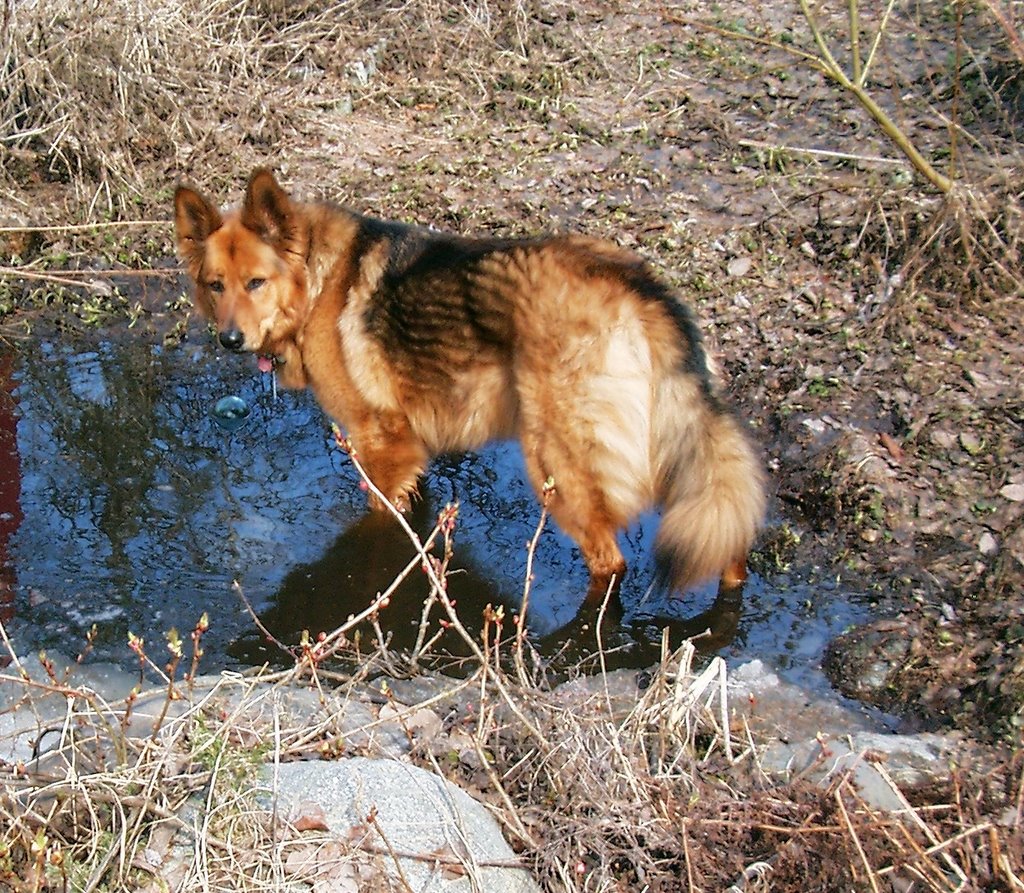
Our oldest dog, Rosemary, is the self-proclaimed pond gardener of the family. She and her late brother, Basil, took that job away from me six years ago. The first thing she does in the morning, after creeping out from under the bed, is head to the pond. It’s her last destination before crawling back into her den at night. She drinks from the pond, plays in it, sits by it, watches critters swim in it, and just generally co-exists with it. It’s her favorite garden spot. She goes there in the winter and even though it’s frozen, icy and covered with snow, she paws, digs and ‘drinks’. She’s there every day as it thaws in the spring, encouraging its breakup, drinking scummy thaw-water and wading into its icy depth. It is Rosemary that keeps the vegetation at bay along the edges. It’s Rosemary who propagates the water plants as she pulls on them, distributing little bits here and there to grow anew. It’s Rosemary who moves the rocks and gravel along the bottom into positions more suitable for footing. She and Basil were the architects that created their own special drinking hole and molded the sloping walk-in approach that we all enjoy.

Basil was a trim one hundred and fifteen pounds, and Rosie is just under one hundred. Their superior weight and wonderfully large paws did things in the depths that I could never have accomplished – smoothing the bottom, rearranging the flora, working the leaf compost and insect environment – gently keeping the pond alive. Ever vigil, the furry ones quietly gardened while I was occupied elsewhere.

We now have a new gardener, steadily learning under Rosie’s tutelage. His name is Chervil and he is a vigorous addition to our staff! Although his talents are yet undeveloped, it looks like he’ll be more of a terrestrial gardener; a keeper of the trees and paths. Eighty pounds of puppy thundering down the walkways has a very stabilizing effect on the stones. His interest in tasting the shrubs has already provided some unexpected propagation and creative pruning, and his love for fruit should provide seedlings galore next spring. I look forward, with interest, to the changes in the garden as he learns his craft. While I have great hopes of lending some measure of control to his horticultural education, I harbor no false expectations. Perhaps a nudge here and there as to what actually needs pruning, as I remind myself that surprises are fun and change is good!

A wee nibble here and a new shrub shape evolves; a visit to the pond – some overdue separation of your water plants, but wait! There’s more! Dogs are the happiest, most non-kvetching soil mixers on earth! Training dogs to dig only in a soil-pile is quite simple and, in fact, is a useful outlet for their digging instincts. Mound your dirt, compost and amendments in a pile and repeat the command ‘mix’ as they plunge vigorously onto the mound - soil flying. (It would be a good idea to step back and shut your eyes about now). The tiniest bit of raking will re-gather your soil and provide you a mixture that will be the envy of your fellow gardeners. Even if you don’t have a garden, providing a pile of dirt with a bit of judicious training will save your lawn - and you’ll make Rover very happy!

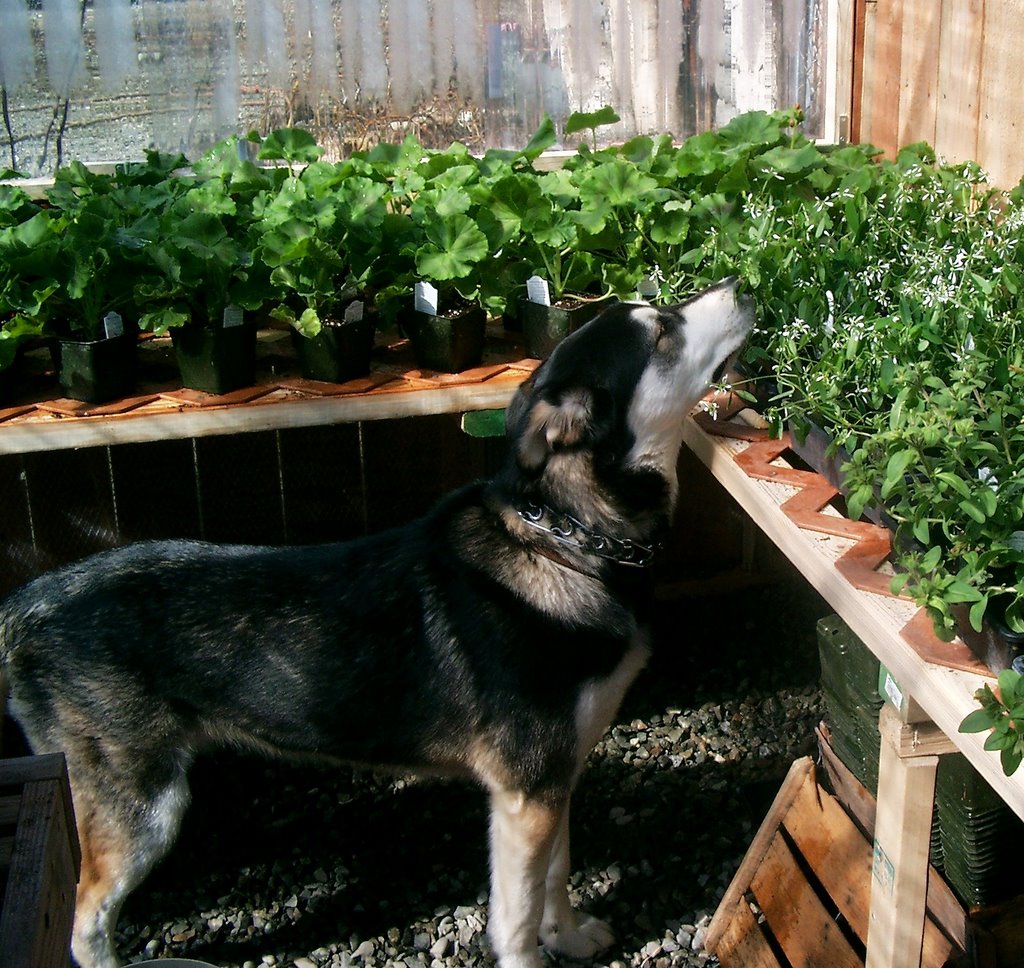
For more photos of dogs at work in the garden click the Garden Dogs link to the right.

Saturday, September 30, 2006

Holms and the case of the dead apple tree

DD One
Every spring I get a raft of phone calls asking about dead plants. No, people aren’t asking to buy them, they just want to know why something looks dead when it looked so great in the fall. While I’m not Sherlock Holms, or even Miss Marple, it often boils down to one thing. Fall water, or a lack thereof.

When I ask if the plant went into winter with good, moist soil, I usually get a long pause followed by, “What do you mean by that?”

This time of year it seems like it’s always wet outside. Fog, mist, cool evening temperatures causing heavy morning dew, quite a few clouds; these all give us the impression that we are experiencing moisture. Remember, we are above ground and we feel cool and damp, but the life of a woody plant is all about what’s happening underground.

Two weeks ago I was digging (chipping would be a more apt description) on a steep hillside in an attempt to create what I hoped to be a really amazing staircase of rock and aggregate. The hillside is primarily hard packed shale and concrete-like mud. Just inches below the surface it was so dry and hard that I needed a pounding bar just to loosen the surface. (Remember – everyone has been complaining about how wet our weather has been!) For several days I chipped away at the ground with my bar and scooped out the freed bits with my hands. Not a lot of fun! Making no progress, and having tons more productive things to do, I walked away from the never-to-be-finished-much-less-started staircase and stayed away for a week. In the mean time it rained - long, hard, healthy rain! I rallied myself for another attack this week and to my shear joy I was rearranging dirt on the hill like a giant gopher! One long rain made all the difference! The soil was soaked down at least two feet, and a thrill to work in. Yes, I know; being bent over nasty ground on a hillside too steep to perch on, pitching dirt, is not a thrill for everyone, but I was in heaven!

As you guessed, or at least I hope you have, all of this is to illustrate a point. Moisture matters! In this case it loosened the ground and made my job easier, but in the case of roots, it can literally mean life or death. While we are in a frenzy changing tires, putting on snow blades and getting ready for winter, our plants are quietly doing the same. They need to be at their healthiest right now; plump cells full of stored energy with fleshy, thick roots, not emaciated drought shriveled ones. The trouble is it’s all happening underground. They don’t show the outward signs of drought as they do in the heat of the summer, and it’s not likely they’ll holler at us, “Hey! We need water over here!” They just keep quiet, look stoic and die in the spring.

Trees and shrubs in the apple (Malus) and prune (Prunus) familes are quintessential for this. These include eating apples, rose-tree-of-china, and nanking cherry. They often begin to get nice leaf and flower buds then suddenly shrivel. Soon the wood begins to dry and dark spots appear on the bark. The once puffy buds are now dried and the branch tips are crispy. The fact is, their roots are too damaged from winter freeze and they can not feed themselves. Once all stored energy is gone, they go kaput!

A number of evergreens such as Norway and Colorado spruce and many juniper are especially susceptible. Surprisingly, even our native birches are not safe. Their particularly wide platter roots can suffer fall drought with ease. They leaf out in the spring, after which it is common to see the tops of the trees looking dead. Looking around our forest with this in mind says a lot about our past several summers without the need to have experienced the weather first hand.

So! You’re not quite through watering yet. I’m not talking about daily watering, just keeping the ground nice and moist until it is frozen. And don’t forget your friends that are planted under eves or other obstructions. This may require some awareness on your part and perhaps a hose hook up once in a while, but just think - you won’t have to wonder why your orchard looks like a graveyard next spring.

Sunday, September 24, 2006

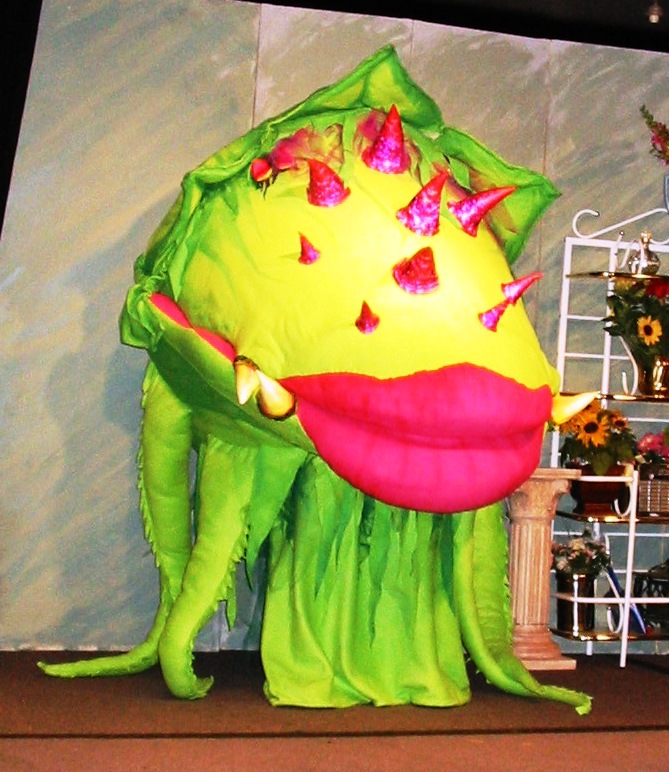
Inside the World of Carnivorous Plants or How Audrey 2 Ate the Gardener

DD Two

Audrey 2 ready to eat!

Gardeners who know me know I love really BIG plants. But, those are found in my garden and not in my workshop. I just spent the last month breeding a man-eating plant and nurturing it with anxiety, blood, sweat and tears! And she . . . Audrey 2 . . . really ‘eats’ actors. Audrey 2 is the carnivorous plant character from the play Little Shop of Horrors. Remember the movie with Rick Moranis as the dweebish Seymour who discovers the exotic plant that winds up eating his boss, his girlfriend Audrey, and Steve Martin’s wonderfully sadistic dentist character? That’s the plant! Instead of getting my nursery stock put away for winter and enjoying the last of my garden’s bloom, I’ve been living inside a giant theater prop cum carnivorous plant. The last time I did this I had to build a 25-foot tree with a 12-foot root base for the Legend of Sleepy Hollow. Hmmm. I think I’d rather be outside weeding on my knees than on my knees bleeding on chicken wire in the studio. Maybe theater plant props are all carnivorous. I know they eat the artists who build them. But, I digress . . .

Carnivorous plants don’t come from outer space and they’re not just found on stage or in exotic and tropical environments. We have some carnivores and semi-carnivorous botanical species living in the backyards and wilds of Alaska. A carnivorous plant has to attract, kill, absorb, and digest its prey. The semi-carnivores might rely on fertilization from the droppings of bugs eating smaller insect specimens caught on sticky plant surfaces or the compost created when those trapped insects are broken down by bacterial action.

Capsella bursa-pastori - Shepherd's Purse (Photo: Dr. Barry Rice)

A common weed in your yard, Capsella bursa-pastori, commonly known as Shepherd’s Purse, is listed as a semi-carnivore. This widespread European mustard has seeds which release an adhesive compound when moistened. This traps small aquatic animals whose demise and composted remains appear to help fertilize the germinating seeds. Wow! Maybe this will work for mosquito larvae in our ponds. Shepherd’s Purse, notes Dr. Barry Rice, Director of Conservation International Carnivorous Plant Society, while”striking, it is not clear if this really means the plant is carnivorous. There are a few problems with this hypothesis---in particular, this plant does not grow in particularly wet areas, so why should its seed have a carnivorous technique that it cannot exploit? It is more probable that the seed's mucous has other valuable properties we have not yet figured out.” I’m still going to throw some in the pond next spring to see if it has an effect on the mosquito population. Of course, that might have a negative effect on the other species that rely on them for food. Oh, well . . . we can always cook the greens up for stir-fry.

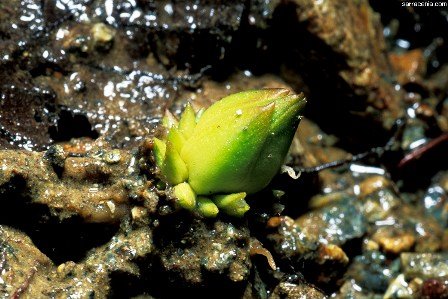
Imagine my surprise while cruising around Dr. Rice’s website www.sarracenia.com finding a photo that looks just like Audrey 2! A member of the Butterwort family, the winter buds of Pinguicula macroceras are perfect stage props. In the original play Audrey 2 is thought to be a cross between a Butterwort and a Venus Flytrap. There is a very pretty Butterwort in Southeast Alaska, Pinguicula vulgaris that looks nothing like you’d imagine as a carnivorous plant. If you go to Matt Goff’s website www.sitkanature.org/wordpress and look at his Sitka Plant Photos under Lentibulariaceae, you’ll see a lovely image of a Bog Violet or Common Butterwort. The Hairy Butterwort, P. villosa, can also be found in Alaska’s wilderness.
Pinguica macrocera - winter bud stage (Photo: Dr. Barry Rice)

Speaking of Venus Fly Traps, have you seen the latest crop in our local stores? Did you know you can find Fly Traps that are red, pink, or almost dark wine colored? A trip to www.californiacarnivores.com, will take you to Cook’s Carnivorous Plants (they have a great animation introduction!) where you can purchase such aptly named varieties as ‘Red Dragon’, ‘Red Piranha’, ‘Big Mouth’, and ‘Fang’. Who knew they came in so many colors and sizes? If you’re tempted to buy one go online at Dr. Rice’s site for thorough instructions on how to keep these exotics alive or look for his new book “The Complete Grower’s Guide to Carnivorous Plants” just released this month by Timber Press.

Thanks to the folks at the Spenard Builder's Supply, Keenan & Deborah Retherford and Peter Ann at The Fence Emporium, Robin Wessel at Off Her Rocker, and neighbors Ahna and Chan Simonds for keeping me in glue, sanity, and digging out raspberries that were taking over the planet and my garden! And hats off the puppeteer Bowen Gillings for going along with this project! I just hope his back survives the run.

. . . . Now, I can get back to building my sculpture of a giant stylized calendula seed!

Little Shop of Horrors is playing September 21 through October 28 - Thurs Fri, & Sat. 7 pm at Mad Myrna's in Anchorage 530 E. 5th Ave, 276-9762 or www.alaska.net/~madmyrna.

Little Shop of Horrors director Christian Heppinstall surrounded by 'the street goils' Crystal (Charlotte Kopp), Chiffon (Shelly Wozniak), and Ronnette (Sarah Alvarez). Photo sans chewing gum!


To see more photos of Audrey 2 go to www.woolwood.blogspot.com or to read Donna Freedman's article in the Anchorage Daily News about the building of the Audrey II go to www.adn.com/life/story/8218136p-8115053c.html. For other photos of Brooke's previous theater props and costume design go to www.christianheppinstall.com and click on the 'Productions' link and go to 'Androcles and the Lion', 'Legend of Sleepy Hollow'.

Saturday, September 23, 2006

Wiches wilt, wicked whiteness - what's next?

DD One

By this time of year, most of us have smelled something strange in our gardens or woods. What is that stinky, mushroomy scent in the air? Never smelt it? Count yourself lucky indeed! It’s another one of those garden nemeses, ranked right up there with Moose for difficulty to control. Powdery Mildew, the ‘Witches Wilt’ of the Middle Ages, is one of the oldest recorded plant diseases. And with a name like Witches Wilt, need I say more?

Like moose, powdery mildew is always ready to attack, is rarely seen approaching and is always harmful if allowed to wallow in your garden. And they are both equally impossible to chase out once they’ve entered the gate!

Powdery Mildew is a common name for a small group of closely related mildews that manifest themselves in a similar manner. The primary sign that these microscopic beasts have invaded your territory are grayish white, powdery blotches on leaves, stems and buds. If left unchecked, the growth will soon devour its victim. Once a plant is infected, leaves can turn yellow and drop prematurely. Young growth is especially susceptible with twisting and deforming, sometimes before the mildew appears. Flower buds may also develop abnormally or not open. Even before the plant is swallowed up in white, stinky yuck, it can look like it was abducted by aliens and used for some horrific experiment. Worse yet, it can leave you feeling desperate to know what in the world (or other-world) has hit your beloveds.


Powdery Mildew on Rose Leaves

Without introducing too many dull and sleepy details, it is important to know this tiny enemy. First, realize that the spores are carried by air currants so they cannot be kept out of your garden. Once settled onto your plants they lie in wait for the perfect day to pull out their fangs and spring to life! The optimum germination temperatures for these mildews are between 68 to 77 degrees F with optimum relative humidity above 40%. It is a popular belief that water on the leaves encourages germination, however dry leaves under ideal conditions are just as susceptible. Low light also seems to favor powdery mildew development. From the time of infection to the sign of symptoms takes about a week or a little longer, and by this time the secondary spore production is well underway, reproducing every 48 to 72 hours since the initial infection! What all this means is that once you’ve sniffed out the problem or noticed that your once-favorite rose is in deep trouble, the stuff could be anywhere!

While I will be the first to tell you that it can sometimes be a pain to keep up with this miniscule life sucking force, it is not impossible.

Sulfur is a traditional combatant with two major positives: it’s cheap and effective. Furthermore, it’s been used effectively to control Powdery Mildew throughout the world for nearly 150 years, with no development of resistance, however, fungus are nasty and sometimes so is the cure. There are many sulfur containing fungicides on the market but the solution has to be at lease 33% sulfur to be effective. Because sulfur acts largely through vapor, its activity is temperature-sensitive and does not work too well if the temperature is below 65 degrees F. That limits some of our application times right there! It is also somewhat phytotoxic (in other words, it is toxic to foliage and will defoliate your plants) at temperatures above 85F. In spite of these limitations, I have been nuking these mildews with sulfur for years. If you’ve ever had a disgusting infestation reducing your favorite perennial to a lump of dried up trash, losing a few (or a lot) of leaves along the way is an acceptable liability.

Potassium bicarbonate works in a similar fashion, with similar limitations, but must be present in the fungicide at least 85%. There’s a bit more information on both of these weapons online at dirtdivasgardening.blogspot.com.

A more drastic (or is it?) approach would be to yank the plant out by the root, put it in a plastic bag and throw it out, but perhaps a gentler, though less thorough approach would make you happy. If so, try mixing up the following and attack with a spray bottle.

2 ½ T. light olive oil
1 gallon water
A few drops of liquid soap
6 t. baking soda

Most importantly – think wicked whiteness and beware! It’s out there and waiting to pay you a personal visit!

Friday, September 15, 2006

Gardening, and a reflection on life and death

DD One
A particularly difficult summer of loss has me contemplating the roll of gardening in the grieving process. As some of you readers know, this spring started with the loss of my giant dog and best pal to wabblers syndrome (see first blog post). My father lost his battle with esophageal cancer two weeks ago. It was a particularly rough go that has had us in upheaval for well over a year. This painting of him was done in May of this year, just as he began his final journey. He was 78 years old.

My sister's husband fights on the losing end of a rare, non-treatable form of skin cancer. The extended family has had several losses and the entire clan has been thrown into what seems like a permanent time of grieving. All the while the gardens continue to grow and the blooms continue to ebb and flow. Fall colors are showing the reminder of another season coming to a close. There is no way to make certain predictions about gardens or grief. Just when you think you've got everything under control tears tumble down, and out back the weeds are invading the rock garden! Darn! Here we go again!

Grief counselors suggest a number of tools to help you through a difficult time of loss. Things like journaling , eating well, exercising, getting rest, reading and learning, seeking solace, practicing comforting rituals, letting out your emotions, and nurturing something. Now if that's not a description of gardening, what is?

Garden journaling is a great process of recording, creation and just plain distraction. You don't have to be scientific to make a garden journal, just say what you want, record your planting, harvesting, likes, dislikes and feelings. If your thoughts spill over into grief, all the better. Read up on your favorite flower and draw pictures to convey your emotions. It may be time to bring new plants to your garden or read some of those gardening books gathering dust after the summer. While feeling especially low it is good to put your gray matter to work and concentrate on something new.

What about solace? The company of plants never passes judgment on a teary, grieving gardener. If anything, I believe that your garden would lift you in its arms and comfort you if it had opposable thumbs (as well as a few other anatomical alterations). I've had some of my best crying sessions while watering. As for comforting rituals, while I'm not much of a weeder, I have friends who love to weed and find great solace in its rhythm and repetition not to mention a feeling of elation when done.

We tend to think of ourselves as the keepers of the garden, but I think the opposite is often true, our gardens keep us. They hold us upright when we are off kilter, they knock sense into us when we are whacked out and they heal us when we are sad. Whether it be the ritual of weeding, the solace in being alone with your thoughts, or the love extended in nurturing the earth, I know of no other place I'd rather be when I am down than outdoors. For many a non-gardener walking or roaming about in the woods has the same healing effect. It's often difficult to show our true emotions to others and sometimes even more difficult to work out our troubles with the added burden of conversation, but quiet time in the garden offers a host of therapeutic needs without outside confusion. I think the salt of our tears even benefits the soil - perhaps a little added potassium?

Time in the garden fills our lungs with fresh air, clears our minds and almost always ends up with inspiration. Inspiration to write a note to someone in need, to re-design a corner of the garden that's always been a bit strange, to dig through all those old photographs on the shelves in the office, to call a friend, to plant a tree for a loved one, or just to order more tulips!

The Victorians obsessive craze for reinventing our language in flowers has long fascinated me and brought me solace. I walk in my garden when overcome and after an initial outburst of anguish I find myself saying out loud the meanings of the plants that surround me. It is a therapeutic thing and brings smiles, tears and contemplation, but it has a healing affect. The wormwood by the pond speaks of healing and the honeysuckle of thoughts of bonded affection. There is strength and protection in the juniper and the feverfew. The borage tells me to have courage while the chamomile speaks of patience. The sweet basil and for-get-me-not tell me that all love is not lost. The iris at the pond's edge tell me to have hope and faith, the burnet reminds me to keep a cheerful heart while the forsythia demands of me thoughts toward the future and anticipation of things to come.

It occurs to me that I am very fortunate to be a gardener. Embracing our emotions and our gardens can open us to many wondrous things. Though following their paths will change our lives forever, they both offer us opportunities for full and incredible futures. If you've never planted anything and are sad, start now. Your happiness, or perhaps your life, may depend on it.


Monday, September 04, 2006

Think Spring - Think Color - Think Tulips!

DD One

The humble tulip is not humble. The first drawn tulip on record is a calligraphy character on an Italian bible dated 1100 AD. Since the 16th century tulips have been bred in England. The Dutch started cornering the commercial market in the 17th century. And no wonder! Though under used here, tulips are the kings of spring beauty. There is nothing more glorious than a carpet of red against a background of melting snow and tuffs of green.

Tulips are really quite simple to grow, but have gained a stigma as hard to deal with. I think it’s because they are often planted in poor drainage, too deep or too close to the surface, or non-hardy varieties are planted. There are currently 15 classifications of tulips – from short to tall, wild to tame and hardy to fussy. I prefer to think of them in two categories – those that are hardy perennials, and those that are not. It makes things a whole lot easier.

Hardy tulips that grow well here include some of the oldest varieties – Darwins, Darwin Hybrids, Cottage and Triumphs. All of these are early bloomers, flowering throughout mid to late May. Colors range from bright red, to true yellow to a variety of pinks and pastels. For success it is essential to think ‘drainage’ – then think ‘drainage’ again, plan drainage and talk drainage. Wet, undrained soil is a killer for these bulbs. Use common sense and follow a check list. Is the under layer of your garden clay, rock, or some other impervious surface? If so, your bulbs will not be happy, but a raised bed may be your answer. Is the soil wet all the time? Is it always dry (also not good)? A decent, well drained soil with 1/3 sand added is ideal.

Running a close second for cause of failure is your best friend, Rover. Dogs love to dig up bulbs! They are delighted when you are thoughtful enough to spend hours on your hands and knees hiding little treasures for them to dig up, especially if you use the usual recommended dose of bone meal as you plant. “Hummm, something to dig that smells yummy – thanks Mom!”

This is not a warning that is to be taken lightly. A couple of years ago, five of us spent most of a day in a clients landscape putting in thousands of bulbs only to have a friendly, lovely creature follow us around digging them out - with us following her around putting them back in! Alas! After our departure they were all hers and the digging continued. In the end only a couple dozen bulbs emerged in spring, having managed to outwit the little darling. Please plan for this if you have four legged family members.

Planting tulips about five inches deep is perfect. This gives them winter protection, space to grow and allows for their tendency to ‘float’ nearer to the surface through winter freezes and thaws. If planted too shallow, this ‘floating’ will freeze out the bulbs or produce weak root structures and plants that do not stand up or develop well.

What about all those exotic looking tulips that grace the covers of magazines and are common in florist’s coolers? The bulk of these are in that second category I mentioned earlier, non-hardy plants that grow well in pots. This is really great news for us! Potted tulips are among the loveliest of deck dĂ©cor for spring. Varieties suitable for containers include Lily Flowered, Fringed, Parrot, Peony Flowered, Water Lily Tulips, and the hard to find Greigii. These tulip groupings run from frilly to flared, green striped to mottled, double and triple petalled to single, undulating leaves to grass like ones. Planted in groupings of color, shape or texture, they are true head turners.

To have successful potted tulips, buy bulbs now and store unplanted in sand at forty to forty five degrees until April. On April first, pull them out and plant in pots with good drainage using well drained soil. Keep moist and very cool. Growing forced (potted) bulbs in warm conditions will produce tall, nasty looking foliage of poor color. It also makes funky flowers that bloom through very quickly. I like to put them outside in a cold frame outdoors. This method makes a strong plant that blooms in mid to late May.


Thursday, August 24, 2006

Chocolate Saves Local Gardener From Too Much Rain!


Dirt Diva Two

“Man Nearly Killed by Monster Vat of Chocolate.” Mmm, headlines make me hungry. It’s raining and blowing and raining and . . . well, you get the picture. There’s no way I’m going to go out and garden in this deluge. The plants are soggy, the raspberries are soggy, the rose buds are brown mush. It's perfect mushroom weather. I feel like I’m turning into a mushroom with all this rain. It’s 44 degrees out and it’s not even September! So, I’m sitting here cruising the internet, thoughts of hot chocolate mushrooming through my thoughts. I pull my sweater up to my ears and mindlessly type ‘chocolate gardening chocolate gardening’ on the Google search bar. Surprise!

Lily 'Coral Butterflies'

& Atriplex hortensis

There are references to chocolate, gardening, and flowers galore! Well, not actual food chocolate, but, plants the color of chocolate and some that smell like chocolate. Apparently, chocolate is the ‘new’ black - the ‘in’ color for modern gardeners. Browns, tans, black, wines, and maroon, all make up the more flexible dark gothic colors of the chocolate garden scheme. They even had a chocolate garden at the 2005 Chelsea Flower Show inspired by Willie Wonka and the Chocolate Factory. The Roald Dahl Foundation Chocolate Garden, designed by John Carmichael, had cocoa pod-like gravel and a water fountain that seemed to flow with chocolate. Hmm. Chocolate scented and colored flowers? Okay, I’ll bite. Let’s see what will grow in our zone 3 gardens shall we?

I know my Columbines, the black and white Aquilegia vulgaris ‘William Guinness’, and the deep wine ‘Ruby Port’ will qualify. Aquilegia viridiflora ‘Chocolate Soldier’ actually smells like chocolate, but, it’s only about ten inches tall, so, you’ll have to get down on your knees to enjoy it! The Sweet William, Dianthus barbatus, ‘Sooty’ is almost black with deep purple flushed foliage and would look lovely paired with the columbines. Bugleweed, Ajuga ‘Chocolate Chip’ or ‘Caitlin’s Giant’ have deep chocolate colored foliage and pretty blue spikes of flowers. Don’t forget the Heuchera family which has many dark wine to almost black-leaved members like ‘Chocolate Ruffles,’ ‘Palace Purple’, or ‘Plum Pudding.’ Throw some butterscotch on top with the hot gold Heuchera ‘Marmalade’ for a mouth watering effect.

The tall Hollyhock Alcea rosea ‘Nigra’ has satiny black flowers which are beautifully set off by annuals like deep gold or wine red sunflowers (for a photo see August 10th posting on www.woolwood.blogspot.com), deep burgundy sweet pea ‘Midnight’, the black bachelor’s button ‘Black Ball’, and Nasturtiums ‘Black Velvet’ or ‘Mahogany.’ Asiatic lilies like deep maroon 'La Toya' or 'Nerone', the white ‘Tinos’ with her deep carmine throat, or chartreuse ‘Latvia’ with a maroon stardust pattern will look lovely as well. Add some contrast with golds and yellows for a hot look. For a cooler effect try annuals like white Borage and Cosmos or the perennials Thalictrum rochebrunianum, a tall meadow rue with delicate lilac rose flowers and the white
Monkshood ‘Ivorine’ and shell pink ‘Carneum roseum’.

Berberis thunbergia 'Crimson Velvet'

If you’re lucky to have a Canadian red-leaved choke cherry tree and the maroon leaved shrub Physocarpus opulus ‘Diablo’ you could have a garden room planted in all wine, maroon, black, and deep reds. Actually, gardens designed around one color scheme are very cool. Instead of planting a lot of just one kind of wine red lily, try to find several different shades of wine red and black lilies to plant together. This livens up the colors and keeps them from being too ‘flat,’ a problem that often plagues plantings of solid colored lilies.

The trick is to place these dark colors so that they don’t disappear from view. Either use them as background to highlight a bright colored specimen or place them in the foreground in front of lighter colors. I read where a British garden designer actually held up a bar of chocolate, squinted one eye, and perused the dark heart of his chocolate garden. He claimed the Cadbury’s bar “disappeared” into the color scheme thus the design was a success. No doubt he said that while tucking his chocolate stained hanky back in his pocket. I’ll have to try that myself and see if it works! Maybe I’ll get one of those chocolate bars with lavender flowers in them to keep to a gardening theme. Well, if it keeps on raining check out this online nursery www.chocolateflowerfarm.com for some interesting ideas and garden gifts. For photos of the Roald Dahl Chocolate Garden and some terrific garden pictures go to www.mygarden.me.uk/chicgardens.htm or www.chelseaflowers2005.blogspot.com. Stoke up the fire, grab your chocolate, and relax. The weeds will wait for you.

Byer's Peak in the Chugach Range with Asiatic lilies and Campanulas after days of rain.

Thursday, August 10, 2006

Late Bloomers and the Fruits of Summer’s Garden Labors

Dirt Diva Two

It always amazes me that the perennials that
color my garden in August are, for the most part, the big dogs of summer. Like fists rising from the soil, they tower above the garden in defiance of the frosts sure to come by mid-September. Magnificent Inula is opening her golden rayed flowers studded with bumblebees above huge tobacco-like leaves that glow with a fresh summer lime green. The Port Alberni tiger lily is smirking alongside with his brown freckled orange trumpets looking down at the plum blue catmint, Nepeta transcaucasica. Tall, stately Valerians are still sending their perfume out over the garden, but, will soon set their ubiquitous seed daring me to cut them before they escape to the ground. Only the Scabiosa-like flowers of the twelve-foot Cephalaria gigantea have yet to bloom. The magenta mist of the plum stemmed Thalictrum rochebrunianums is an elegant foil for the Cephalaria, reaching just a couple of feet below her arcing stems with their butter yellow stars. Even the walls of blue and purple Delphiniums are still pumping out color along with the Monkshood. I wish I had a Plume Poppy, Macleaya cordata, (one of Sally’s favorites) with its large fig-like, blue-green velvety leaves and feathery plumes of cream-colored flowers. It would be lovely next to the beefy Ligularia przewalskii’s tall spikes of yellow flowers in the shade.

Late bloomers in our gardens aren’t always looking down at us, but, many are so large that it takes all summer to grow before they can get around to flowering. Trying to figure out how to extend your garden’s bloom and color right into the frost isn’t difficult. You need to get out and visit public gardens such as the Matanuska Valley Agricultural Showcase Garden at the Visitor's Information Center in Palmer, the Alaska Botanical Garden in Anchorage, the various garden displays at the State Fair grounds, the gardens at some of the small specialty nurseries, or just take a Sunday drive to check out what’s blooming in the neighborhoods.


Asiatic lilies, particularly the tall1c or down facing types, can be in bloom right up
to the last weeks in August.The lacquer red ‘Red Velvet’is an old-fashioned small blossomed lily that looks at her feet instead of the sky. Tiger lilies are also late bloomers that come in freckled white, yellow, red, and pink nodding
trumpets. The taller varieties of Veronica should still have some bloom left and make a
good pairing with lilies. Under plant these sun lovers with some Dianthus deltoides, a creeping, self-seeding pink that comes in wine red, deep pink, or white.

Other late bloomers are Monarda, Yarrow, Sedum, and Filipendula Rubra Venusta (meadow sweet). The Sedum will need good snow cover, full sun, good drainage, and hopefully no winter rains and ice, to survive our winters. The Yarrow family tends to be promiscuous and seeds itself everywhere spreading surprise colors all over the driveway as it loves gravel and poor soils. I love volunteers and spontaneous plant surprises, but, yarrow are easy to deadhead and their seedlings easy to spot for weeding out of your beds. A member of the mint family, Monarda likes good rich soil, regular watering, and dividing to perform well or it is a short-lived perennial. Like the yarrow, it is also an herb that can be used for tea and culinary use with leaves that have a marjoram-like fragrance and flavor.

Foliage and shrubbery are an important background for the late summer garden. The annual salad herb, Atriplex hortensis, also known as Mountain spinach or Red orach, has a beautiful deep burgundy color. A relative of the equally tasty weed, Lamb’s Quarters, the leaves can be used raw or cooked and make a great floral filler for cut flower arrangements. Colorful shrubs such as the green- gold Spirea japonica varieties, ‘Fire Light’ and ‘Magic Carpet’, have a red tinge to their leaves that is enhanced by cool weather. Their deep pink flowers are an added plus in the late garden. The florescent gold leaves of Physocarpus opulus ‘Luteus’ (Ninebark) and Berberis thunbergia ‘Aureum’(Thorn berry) really set off the deep plum and rich burgundy of their siblings Physocarpus ‘Diabolo’ and Berberis thunbergia ‘Rose Glow’ and color the garden all season long.

Remember, you can plant your perennials and most shrubs as late as September, so you can still find a few bargains at the nurseries to plump up your late summer garden color. These cloudy days are perfect planting weather, so keep on gardening!

Tuesday, July 18, 2006

Be There or Be Square - The Alaska Garden & Art Festival!

DD Two

Summer is NOT over, yet!
I know we all feel like we’ve been shortchanged by Mother Nature lately, but, we do still have a few weeks left before the next frost sets in. July is the month when our gardens are really hitting their stride and a great time to get out to the garden tours. Next Saturday will be the 2nd Annual Garden and Art Festival at the State Fair grounds-an event that will knock your garden clogs off! This is the best way to enjoy all that head gardener Becky Myrvold and her staff have done with the over 35,000 plants that are planted in the beds every year along with 200 hanging baskets and 100 whiskey barrels that make the Alaska State Fair sing with color. So, stop your whining and get out to see the efforts of some real gardening athletes.

With a small crew of gardeners planting and pruning to get those great blooms for the fair, Becky hopes to be finished planting by next week. This year Becky decided to do the unthinkable-a white monochromatic color scheme. “I decided to go out on a limb and do an all white theme – so all of our beds and baskets will be all white, silver or gray and their wonderful variations! It was a challenge to myself – to see if I could create enough interest using only a monochromatic scheme. Did I pull it off? I really won’t know until later in the season.” Personally, my favorite part of my garden is mostly white with a hint of pink veronica. It just glows in the evening light! But, it’s a scheme sure to bring out the garden nannies and their grousing about color. “I suspect that the gardens will look lovely as usual, but, anxiety is part of the job. I vacillate between being worried that I have failed and being excited to see if it will be beautiful,” she noted. Becky’s really excited about the Ptilostemon diacantha, a thistle-looking plant with gray green foliage and white variegations.

Of course, it all started last fall with the seed orders and planning the garden theme, followed by the actual seeding in January. By March things are in full swing with pricking out the seedlings and starting the transplants. “The magic of seed germination” is Becky’s favorite part of the job. Going to the office in the morning to be greeted by “the beauty of a greenhouse in mid-April when all the plants are young and actively growing” is something many of us yearn for in the early dawn gloom. For Becky “the wonder of walking into the Perennial Garden and finding someone blooming I had forgotten I planted” and “poking around in the early spring for new shoots” is part of the joy of the job. You’ll notice she personifies her wards as ‘someone’ rather than as just a plant. This gardener is really ‘into’ her plants!

Part of the State Fair’s agenda is to educate the public about agriculture in Alaska. Their garden program illustrates just how many varieties of plants we can grow in our Alaskan gardens.
Like a movie director, the head gardener is invisible in the wings while the public enjoys the fruits of her labors. For Becky there’s satisfaction of a hard job well-done if all those perennial “plant crazies” who come each year can learn something new. And there will be lots of new things to watch for this year with the revamped plantings at Raven Hall, more paved paths in the Eckert Garden, and a picnic retreat at the Flagpole area.

Of course, the whole festival would not take flight without the unflagging efforts of the indomitable festival organizer Margo Frey, whose energies and organizational skills should be distilled and marketed as a supplement for the rest of us following in her wake! And she expects gardeners to heed the call to enter the Classy Container Contest. Do you have a stunner out there on the deck just waiting for the limelight? Well, bring that work of art to the Red Walk-In Gate on Saturday, July 22 from 11 to 2 for the judging. There will be wagons and helpers to transport your entries to the judging area. Be sure and make room for all the prizes, too!

Alaska Garden & Art Festival, Saturday July 22, 11-6, Alaska State Fair Grounds. For more information go to www.Alaskastatefair.org.

Thursday, June 29, 2006

Garden Tours to Inspire!


DD ONE

Alaska State Master Gardeners hold a state-wide convention once a year. It rotates around the state with various MG chapters hosting. Some of you may remember the last one our local chapter hosted, in April of 2001. It was a great conference with lots of speakers, wonderful seminars and an array of interesting garden related venders.

This year, the state convention once again returns to the Mat-Su MG chapter and they are aiming to correct something they feel has been missing from the state-wide conventions, including their own past efforts. Garden Tours! It sounds terribly fundamental – garden convention, garden tours, right? Well, not exactly. Traditionally the Master Gardener conventions have been held in Feb. and I need not tell you how difficult it is to have a proper garden tour that time of year! While tours of commercial, year-round greenhouses filled in somewhat, there’s nothing like getting your feet inside someone else’s garden to make a gardeners life complete. Granted it can also make one feel tortured and inadequate as you gaze on those giant vegetables and perfect roses, but what’s to inspire if not wonderful gardens? If torture is part of that, so be it.

The days to reserve are July 21 and 22. The conference starts with a keynote from Ed Buyarski, the president of the American Primrose Society. Ed is an entertaining and knowledgeable speaker and promises to fill your head with lots of practical – yes, appropriate for our area! – information on these lovely plants. In addition to Ed, Dan Elliot, past president and current vice president of the Alaska Fruit Growers Association will present on growing apple trees in Alaska. Dan has over 100 varieties of apples in his home orchard and is a wealth of valuable information on the subject. I also understand that it’s a bit of a coup to have him as a speaker.

Stonehill Gardens will be catering a dinner on Friday evening and two Local Master Gardener authors will have their books available for signing. Jeff Lowenfels has just returned from a book promotion tour for his new book ‘Teaming with Microbes’ and will be introducing it that night. Hazel Koppenberg’s cracker and flat bread cookbook ‘The Cracker Box’ will also be available. Herbal Crackers from Hazel’s book will be featured at the dinner, along side wild Alaskan foods and fresh valley produce.


An extended lunch hour on Friday will include a self-guided walking tour of gardens in downtown Palmer featuring the Dr. Myron F. Babb Arboretum, the visitor center’s agricultural showcase garden, the historical garden at the United Protestant Church (the old log church across from the borough building), and the city garden at the Purple Moose Espresso. Three additional gardens will be featured on private tours throughout Friday afternoon: an urban rose garden in Palmer and a Master Gardener’s vegetable garden will be featured. Plant listings will be provided for each tour.

On Saturday there will be another keynote from Ed Buyarski followed by a full day of classes, presentations and activities. Saturday’s events will be held at the state fair grounds in conjunction with the second annual Alaska Garden and Art festival. Between the conference and the festival, Saturday topics include composting, potato late blight, landscaping for wildlife, beekeeping, pruning, garden photography, invasive plants, an ‘ask the experts forum’ with a wide range of plant expertise, beneficial insects, garden wildlife, children’s story time, children’s ‘build a fairy house’, yoga in the garden and sand cast birdbaths. In addition there will be tours of the three main gardens on the fair grounds; the Eckert Memorial Herb Garden, the Perennial Garden and Millie’s Vegetable Garden. These gardens are the babies of Becky Myrvold, head gardener at the fair, and are well worth a look. Becky is a treasure of plant knowledge and design insight and will be giving the tours herself.

Another first for this year’s conference is a children’s forum along side the adult forum, complete with a child’s registration fee. Speaking of price, the two day conference sounds like a bargain in any gardener’s book – only $85.00 per adult and $40.00 per child!

Participation in this event will be guaranteed to turn your brain into garden mush and you’re likely to walk away spouting Botanical Latin, or even worse, discussing microbes with you neighbor! But it still sounds like a no-miss happening. TO REGISTER, JUST CALL 745-7071 OR SEND YOUR REGISTRATION FEE TO: MAT-SU MASTER GARDENERS, C/O PO BOX 2876, PALMER, AK. 99645 ALONG WITH YOUR NAME, PHONE NUMBER, EMAIL ADDRESS (IF YOU HAVE ONE)AND KNOWN FOOD ALLERGIES. It's as simple as that and you can join the fun!

Sunday, June 25, 2006

Hurray for PAR!

DD One
It’s not every day that I talk about vegetable gardening. I don’t hate vegetables – in fact, I love them! Not only are they one of my favorite food groups, they are fun to cut and chop, and look so lovely in the garden. But I don’t grow them. There’s a perfectly good explanation. I have a sister and a number of friends who have fabulous vegetable gardens. They give me veggies, I give them perennials. It’s as simple as that.

So what made me plant a vegetable garden this year? My first ever, I’m ashamed to say. No lightning bolts letting me know I’ve gone astray with all the shrubs and flowers. No fundamental conviction that I should start growing my own vegetables for a change. Just a decision to get behind a good program designed to provide food for those who need it. For you skeptics, here's a photo, but please don't laugh! Remember, this is my first ever!

The Garden Writers Association (GWA) is sponsoring a campaign called ‘Plant a Row for the Hungry’ (PAR for short). Aside from generating over nine million pounds of produce for donation last year, PAR started right here in Alaska! Garden columnist Jeff Lowenfels, (Anchorage Daily News) started the whole thing twelve years ago when he asked his readers to plant a row of vegetables for Bean’s CafĂ©, a soup kitchen in Anchorage. Since then, with the sponsorship from GWA, the program has spread across the country and has begun to make a significant contribution to our country’s hunger plight. According to hunger statistics from the U.S. Dept. of Agriculture, over eleven percent of American families experienced hunger in 2005. There are an estimated ninety million gardeners in the US today! Think of the hungry we could feed if every gardener planted just one row or donated their excess produce each fall to their local food bank? You got it – that’s the whole idea!

PAR follows in the footsteps of the great War Gardens of ninety years ago. This was a very successful campaign launched during World War I, again, from the inspiration of one man, Charles Lathrop Pack, who set up the national War Garden Commission to organize his brain child. The posters showed militant vegetables marching off to war calling “The seeds of Victory ensure the fruits of Peace!” Later, when the war ended, posters boasted victorious vegetables returning home holding high the American flag with the words “War Gardens Victorious, Every War Garden a Peace Plant!” Canning was the most common form of food preservation at the time and there was even a poster encouraging people to “Can Vegetables, Fruit and the Kaiser to”.


The war garden effort, promoted both here and in allied countries, is largely attributed for saving Europe’s food supply during the last two years of the war. By 1916 major portions of farmland throughout Europe had been devastated by war and food reserves had run out. Solders were getting what food rations were left and not much at that. Their families at home were getting even less.

Our country had entered the war late and was not fighting on home soil. As a result, our cities were in tact and we still had healthy, strong citizens who could garden. Why not put these people to work growing food? The War Garden program went beyond home gardening in their effort to feed the troops. Vacant lots, primarily in the US, but also in Britain, France, Belgium and Italy were put into the cultivation of vegetables. The emphasis of this program was in the cities where there were people to man the gardens, mostly ladies groups, Girl Scout troops and hastily formed garden clubs. A survey conducted by the War Garden Commission in 1918 conservatively estimated the number of such gardens in the US at just over five and a quarter million, with some 186,000 vacant lots under cultivation in New York City alone!

PAR is similarly successful because of individual gardeners volunteering their effort to grow food and make sure it is being donated where it needs to be. To join this effort, just designate a portion of your garden as ‘A Row for the Hungry’, it’s that simple. To find out where to donate your produce, call your local food bank, Master Gardener's organization or PAR's toll free number 877-492-2727. There are volunteers all over the country working with this program. Why not make this your year to join?

Confessions of an untidy gardener

DD One
This time of year is always a hard one for me. You’d think I would be whooping for joy – the grass is up, the apple trees are in bloom, the perennials are growing, the alpines light up the nursery and we’re making money. Instead I am grumpy, annoyed and making life miserable for all those around me. There’s a persistent nagging in the back of my mind that I should be somewhere doing something that I’m not. There’s always an unfinished list on my desk and uncompleted tasks in my garden book. It’s all about time and I don’t have enough of it.

Which dragons do I slay and which do I leave standing? Oh dear, oh dear! The dandelions must at least be headed before they start to fly, the tree seedlings need to be removed from the garden before they grow strong and root deep, and any remaining winter die-back on the shrubs needs to go. Really, it is June already! Aside from that, I don’t know where to turn, the list just goes on and on.

I suppose all of you organized decisive gardeners know exactly what you’re up to. I see you out there digging, raking, lifting, separating, cutting, planting and trimming and I am jealous. Yep! Jealous! What a life! Not me and my garden. We are, at best, a disheveled, overgrown partnership of compromises. Mysteries lurk behind each rose bush, surprises in each patch of currants. And nature abounds.

Birds aren’t especially fond of tidy gardens, which makes them feel right at home in mine. Robins have built a nest in the atrium and talk about untidy! Twigs and grass everywhere, which of course I won’t pick up - that would just be wrong. There’s a pile of garden scraps by the alder patch that stayed one day too long and now must stay for the summer. A mamma Junco chose to make her home in there. Soon she will be dodging garden traffic as she darts in and out of the pile to feed her young.

The bugs in the old, dead birch are a feast for the Woodpeckers, both Downy and Hairy, bringing such wonderful rhythm to the twittering air. A bedlam of songs greet us when we step out of the house in the early morning. By mid day they have ebbed, only to pick up later in the evening and continue late into the night. From the look of the activity in this unruly mess, I know we would be missing a lot of life if we cleaned the place up.

In the heart of the garden, Dragon Fly larvae are thriving in the pool. It’s all those dead leaves in the bottom! A lingering sit on the ground by the water, looking into the shallows will reveal a long list of little critters to ponder, as well as a chance to take note of the visitors nearby. Chickadees busily explore the larch tree, Robins hop about after worms and bugs, and, if you’re there very late, when it’s nearly dark, you can feel and sense the little brown bats swooping past your head in pursuit of the dreaded mosquito. All these wonderful creatures are comfortable guests in their disorderly home.

So while I ponder the tidy gardeners and wonder at their organizational skills, my little jungle thrives. Every time I get brave enough to plunge into the cluttered chaos with my trowel in hand, I get lost in its magic and do just about nothing. Oh sure, the paths get narrower every year, the bushes more ragged, the pond smaller, the ground cover larger and the rock work less visible, but what’s a nature lover to do? I planned all this, after all - the right selection of shrubs, the location of the pond in filtered shade, the apple tree arbor, the crazy lilacs and those out of control currants. These were all by design to do exactly what they are doing now – attract life to the garden. So now that they are doing their job, who am I to tidy up?

The moral of the story is this: choose your garden design wisely, for it may bring just what you hoped. Tidy rows of organized, back breaking beauty, or relaxed disorder - or it may be that I’m just a lazy gardener. Either way, this is for all you who love to garden but just can’t be perfect. Don’t sweat it, perfection isn’t natural anyway.

Sunday, May 28, 2006

Reliability at Ground Level


DD One -


If you think of ground covers as carpets for the floor of your garden, you may begin to look at them in a different light. Just like floor coverings in our own homes, each area of the garden has a different use – so choose each ground cover carefully.

For those areas of the garden that are dark, shady, boring and hard to grow in, try one of the many lamiums. These hardy perennials come in an assortment of leaf color from white/green variegated to lime green. They are often used as an annual in hanging pots or containers because of their ability to droop over an edge. These plants are dreadfully under-used as ground covers. I have a fabulous patch of Lamium maculatum in my garden that is all shades of variegated from white to dark green to maroonish/purple, and that’s just the leaf color! The patch collectively blooms pink to purple to white! I didn’t even plant this lovely colony, but it made its way there and settled in, for which I am eternally grateful. It lights up the shady side of the path and looks too fabulous in the fall with golden birch leaves sprinkled on top (see photo above). This is not a ground cover to be walked on and never wants to dry out, but it makes up for these shortcomings in beauty and steadfastness.

If you want aroma, reliability, usefulness, mow-ability and beauty, all rolled up in one, Mentha arrensis (Wild Montana Mint), is hard to beat. Yes, it does provide all these things, and makes a great mint slushy as well! People’s eye brows go sky-high when I recommend it, but it really is a great plant. It’s not as invasive as most members of its family (at least not up here in the North Land) and it tastes SOOO good! It grows up to 12 inches in the sun, and a bit taller in the shade (it can grow in both). It grows without much water, or in moist soil. It doesn’t particularly care what type of soil it is given, responding to conditions by adjusting its size. Tea made from this wonderful little plant tastes like it’s had honey added to it – there is no bitter taste and it can hardly be made too strong. Mentha arrensis can even be kept short by mowing!

Recipe for Mint Slushy

1 large handful of Wild MInt (Mentha arrensis)
2 cups cold water
1/4 cup raw sugar dissolved in 1 cup warm water
2 cups ice cubes

Mix all ingrediants into a blender at high speed until it is the consistancy of a smoothy. Serve with a sprig of mint on top - preferably in a small glasss shaped like a flower pot!

A combination of slow growing ground covers can serve an all together difference purpose and provide a different look. For example: try combining Moss Campion (Silene acaulis) with its glossy green mat and bright pink flowers with the fuzy gray/green carpet and soft purple blooms of Wooly Thyme (Thymus pseudolanuginosus). These two plants have a similar growth rate, share a love of sun and good drainage and form mats at ground level. Twining together over rough terrain, they are indeed a handsome coupling. They are perfect to plant along a rock pathway, on stone steps or on a rocky hillside. Throw in some Veronica prostrate ‘Aztec Gold’ with its golden/lime foliage and you’ll think you’ve died and gone to horticultural heaven. Really, you will! The wonderful blue blossoms on the Veronica are just a ‘way-too-fun’ extra!

The best thing about a reliable ground cover is that it’s reliable! You never have to worry about that part of the garden again! If chosen carefully, to suit your needs, a ground cover should do just what its name indicates – cover the ground! It should also look beautiful, make you smile and perhaps, with luck, you can make a pot of tea from it as well.


Monday, May 22, 2006

Freeing the North American Lawn Slave

DD One


I think the official color for May ought to be taupe. You know, that almost brown, sort of dusty ‘blandscape’ overlaid with chilly gray overcast skies. This isn’t exactly the sort of weather and tone that makes me want to even think about gardening. But, you can already hear the low buzz of the early prowling lawn mowers and the dull whining of from folks complaining about their neighbor’s lawn care; a sure sign of spring. The North American lawn could be one of the most successful behavioral controls ever invented. Think about it. Lawns and turf take up over 30 million acres of land making it the fifth largest crop in North America. There are approximately 38 million lawn mowers dragging North American slaves behind them all summer long. Maybe it’s time to think about freeing our selves and our property from the insidious and destructive institution of sod!

Think about it. Between 1996 and 2004 more than 663,000 of us were treated for lawn mower related injuries in hospital emergency rooms. That’s about 2 out of every 1000 injuries in the ER! Many of those injured are under the age of fifteen or over the age of 60. But, the lawn mower itself isn’t as dangerous as the lawn owner. Americans apply pesticides, fertilizers, and herbicides to their lawns at about four times the rate as applied to agricultural crops. According to the US National Cancer Institute the incidence of childhood leukemia is approximately 6 ½ times greater among families using lawn pesticides than for those who do not.
Fertilizers and lime are applied religiously by homeowners who rarely, if ever, have their soils tested to see if they are even necessary. Many of the chemicals applied to our gardens and lawns find their way into our water supply. A 1990 EPA survey found that 12 of 32 untested pesticides and herbicides made it to their water testing sites. We spill nearly 15 million gallons of gasoline a year while filling these slave masters. Yale forest ecologist, F. Herbert Bormann estimates that we burn about 580 million gallons of gas mowing the lawn annually while polluting the air in one hour as much as driving our cars 350 miles!

Think about it. In the American west approximately 60 % of urban fresh water is used to irrigate our lawns. It takes a lot of energy to maintain water quality, run the wells, pumps, an the water stations just to keep junior in the shower for an hour, let alone to water the lawn! And we’re doing all of this why? Because we’ve bought into the idea that a green lawn and lots of it keeps nature at bay, is an important asset in a neighborhood, and our neighbors expect us to toe the line. In fact, in some places it’s the law that you only have lawn in your front yard. Maybe lawns are just too dangerous and expensive to consider as an asset anymore. You can’t eat your lawn, it’s hard on the environment, and takes a lot of money and work to maintain. So, if you wanted to work hard on your yard wouldn’t you want to work at something with more bang for your buck?

Why not cover some of that lawn with some raised beds filled with exotic herbs and vegetables? You could learn how to grow and cook your own delicious meals. You don’t need lots of lawn for a great garden party, but, you do need good food. Replace that blandscape with flowering kale, colorful varieties of loose leafed lettuces, golden zucchini, rainbow colored chard, lemon thyme, sweet marjoram, and lots of nasturtiums. Wouldn’t you rather spend time with your spouse sitting on the bed doing a little weeding and discussing some exciting new recipes you both want to try? Take a cooking class and renew your relationship with your garden and your former lawn slave!

Try using the lawn as an accent to borders of perennials and shrubs and you’ll have a ready source of material for floral arrangements that will make you the envy of your friends. Children will have more fun hiding around large planted beds than pushing the lawn mower. Pets can be compatible with plantings if you don’t stress out over every little accident. Gardens should be relaxing and enjoyed, not as places to shackle ourselves to expectations of others. That’s what lawns are for. Think about it!


Thursday, May 11, 2006

Contemplating A Late Spring

DD One
About now we’re thinking that a mini-ice-age has set in and we’ll never see summer again! Well, I suppose that could happen, after all, my Mother remembers the May of 1955 when the leaves didn’t open until after Memorial Day weekend! Let’s hope it’s not our turn for more of that! In the mean time it is cold out there, the wind is nasty and persistent and there’s not much popping out of the ground. So what’s a gardener to do?

Why not take advantage of what has been forced upon us and see what the really hardy stuff is out in the garden? What has popped out of the snow? Has anything set bud yet? Is anything in bloom? (not likely) It’s really great, if you think about it. If you’ve been afraid to walk through your garden, put on a warm coat and head out there now. You may be surprised and delighted at what you find. Here’s what I found today.

The champion in the ‘three inches above the soil’ category is the garden primrose, Primula auricula. It even has some little buds! At an even tie are Native Alaskan Chives, Allium schoenoprasum sibericum. They’re up three inches, budded for bloom and taste great to boot. Coming in a close second would have to be Lewisia tweedyi. This fabulous little plant comes out of the snow pretty much as it went in. Perfect, small rosettes of reddish-green succulent leaves are doing their best to cheer up the scenery. Along side this, of course, is Berginia cordifolia. Considered semi-evergreen here, it usually thaws out a deep reddish maroon. A wonderful, rich color in any garden when surrounded by so much brown and gray! Both of these early birds will bloom soon. And then there’s Draba siberica. This flat, ground mustard is a delicate, light green mat bursting with buds. It will be a carpet of yellow within a day or two and will have rushed to first place on my list. While it is a bit untidy when not in bloom, it is irreplaceable for early garden color. Bright and cheerful, it will hold bloom for three weeks if the weather is cool. Flat sedums such as Dragon’s Blood and Variegated are lovely right now, with fleshy leaves and bright red stems. What little troopers!

Runners up, should not be
shunned. Various Delphiniums are 2 to 3 inches out, with their green leafs looking like little fisted hands emerging from the soil. Native Iris, both standard and dwarf (Iris setosa and I. setosa nana) are cutting through their frozen homes like thick grass, forming bud heads as they come. Another wild Alaskan favorite of mine, Antennaria microphylla (pink pussy toes), is living up to its ‘favorite’ category by melting out of the ice in full, soft gray color. Its simi-fuzzy leaves and flat, matting form make it look like a silver carpet on the brown ground. It even feels good to walk bare-foot on, if you’re brave enough to take your shoes off and give it a go!

In the shrub and tree division, the Prunus virginiana wins hands down. This wonderfully hardy tree, known commonly as a Canadian Red, can’t be beat for early leafing. While we are surrounded by native trees too afraid to let out their greenery, this imported ornamental just plunges ahead without trepidation. No cold wind or freezing nightime temperatures are going to stop it from enjoying spring! It has leaves and flower buds that grow daily. It’s neighbor, the Northwood Maple – Acre rubrum ‘Northwood’ - positively delighted me with blooms this year! Arn't they beautiful?

Tuesday, May 02, 2006

Picky Plants Make Perfect Gardens

DD One

We have lost the idea of joint residency as we segregate in huge homes, gate off our communities and work at jobs that are increasingly specialized. We like to categorize, cube and divide. It is natural to bring this concept into our gardens as well, but I’d rather think of the garden as a place where we can bring back into practice the art of harmony.

This time of year we are all reading plant labels and now have a list of plants for the perfect garden. But your desired lovelies come from such varying cultures, will they ever get along? Fear not! With a little technique, many plants of opposite needs can be very happy living together.

The ideal garden would have a number of mini-environments and is not all that difficult to create. Once done, it should fill the needs of a diverse group of plants. A verbal illustration of such a garden built on a site with full sun, might look something like this.

Aligned each corner of the garden with a compass direction. Shade is created by building a garden wall on the SE and SW sides of the garden and by planting an Amur Maple (Acer ginnala) in the southern most corner. A little wet ditch runs inside the wall as it follows the garden perimeter. The mound on which the tree is planted is made of very lean soil and grit. The wall, tree, mound and ditch will provide moist shade, dry shade and wet shade. Voila! Bob’s your uncle and you can now plant your Touch-me-nots!

A fence could replace the wall, a large, shade loving shrub such as a Kesselring Dogwood (Cornus alba ‘Kesselring’), could replace the tree and so forth. You get the idea.

A benched pergola anchoring the northern corner of the garden, serves as an entrance, a place for your Arctic Kiwi vines to flourish, a welcome resting place and a little filtered sun. Flank it on both sides by a hedge that runs to meet the garden wall in both directions. William Baffin Roses would work well for this. They will thrive in the heat, especially with the little ditch feeding them a constant supply of moisture. You have now completed the outline of the garden and have created filtered sun by the pergola, full sun in the garden center, wet partial sun/light shade along the rose hedge as morning and evening sun rotates, and moist sun along the inside of the ditch. A low, raised area somewhere in center of the garden made of lean soil will supply you with the one, remaining growing condition you lack; dry, hot sun. How hard was that? You’ve now got it all and can happily go bonkers planting a diverse and interesting haven.

A couple of things to remember before you get too crazy. The little ditch will need a liner, fairly deep down - around twelve inches - to keep the moisture in the general area you intend it to be. The dry areas work best if bordered by wet areas or well drained walk ways to collect the moisture that will naturally drain through the gritty, lean soil during times of precipitation. The overall amount of sun or shade in you garden is up to you. In following this plan, for example, the larger the garden area, the more full sun you would have within its center. And finally, while it is rare to see a wind warning on a plant label, it is helpful to know your wind direction as well as your compassing.

Planning and planting a diverse, mixed garden is a tremendously rewarding experience and can readily expand the horticultural gray matter. Up here the leaves aren’t even out yet! I’d say there’s still plenty of time to plot and scheme while we ponder that perfect plot.

Monday, May 01, 2006

Cottonwood Beauty!

Posted by PicasaDD One

This Cottonwood stands straight and proud in the River Park near Palmer. I watched this Coral Mushroom form over a number of weeks in the fall of last year while on walks with Rosemary and Basil.

Such simple beauty.

Sunday, April 30, 2006

In Defense of the Cottonwood

DD One
Finally, a new garden club to join! And this one is for the underdog, what more could you ask for? It's really easy - just log onto comments and tell us you're in. ‘Save the Cottonwood Society’s time is here!

Populus balsamifera ssp trichocarpa, known more commonly as Black Cottonwood, or just ‘cottonwood’ here in our Valley, is spectacular, underrated and abused. If it sounds like I’m about to defend this tree, you’re right. It’s been systematically annihilated for years. It’s a big, humble tree that’s treated like a dispensable weed. Well, it’s neither a weed nor is it dispensable. If you’ve chopped them down and cursed the name, please read on. This column’s for you!

Cottonwood can reach amazing heights – up to one hundred and twenty feet! This makes it the tallest broad leafed tree in Alaska. Its rapid growth habit means you don’t have to wait your whole life for the wind breaking and shade giving qualities it provides. We have a lovely, thirty foot specimen in our back yard that wasn’t even there when we moved in twelve years ago! This photo shows an award winning garden in North Palmer. The gardener’s have groomed a pair of these giants for years. It is a thing of beauty and shelters a small patio under its wonderful branches.


Cottonwood also can keep the air in your garden clean. Read on.

The soil surrounding these trees nutures a colony of special macrobiotic organisms that live only around cottonwood roots. These organisms transfer carbon from the tree roots to the soil. Carbon is also captured in the above ground portion of the tree which, when combined with the root community, creates a system of air filtration for the carbon dioxides emitted into our atmosphere, and effectively slows the increase in harmful atmospheric carbon dioxide concentrations. While all trees perform a similar duty, the cottonwood has one of the fastest and most efficient rates of carbon sequestering. Cottonwoods also increase soil’s fertility and ability to hold water. This saves on the need for erosion control as well as cutting down the need for manmade, fossil-fuel- eating, fertilizers. Important stuff! After all, what is the plan for dealing with our atmosphere when our trees have been reduced to a marginal level? I don’t have one, do you?

The waxy resin in cottonwood buds is used by bees to caulk, and seal out intruders such as mice, or other insects that might bring disease and destruction into their hives. The chemical in this resin is also being developed for tree trunk paint to keep rabbits and mice from girdling them in winter. The same resin holds anti-infectant properties and is used in many modern health ointments and soaps. Soap made from the early buds is magical. It leaves the hands feeling clean and smooth as though lotion had been applied. Of all the wonderful herbal soaps my Mother makes, her Cottonwood Balm is my favorite,and soooo good after a long day in the dirt.

The deep, cracked bark of this mighty tree is a major over-wintering habitat for butterflies, bats and spiders. Cottonwood trees are also a valuable bird sanctuary and their foliage, twigs, buds, flowers and roots provide food for many small creatures, such as shrews, voles, squirrels, porky pine and beaver.

My father, Jerome Koppenberg, is one of Alaska’s most knowledgeable log home builders, and while he prefers using spruce because of its relative lightness, easy peeling and cutting, he says that cottonwood is not without value. As a testament to this, there are two wonderful, cottonwood log homes, built by him, on Lazy Mountain. He lists, among its attributes, its height and straightness, its size – each, single, round easily replacing several of spruce, its superior insulating qualities and its longevity.

Now, lets talk about what you’ve all been waiting for. The cotton! For starters, not all trees produce the dreaded stuff. While both male and female trees can potentially flower, the male catkins are fairly cotton-less and only get up to a couple inches long. The females are the trouble makers with catkins up to eight inches long! But even these beauties, if kept in the back yard or on the edge of your woods, should be welcome. No flowers will appear until the trees are ten years old. Think of the joy and the height a cottonwood can bring you in ten years?

Converted to a cottonwood lover? Good! Remember, cottonwood can only provide its many benefits if left standing. Embrace these majestic giants and enjoy a warm, fuzzy feeling every time you swallow cotton on the breeze. One more thing! Don’t forget to join the ‘Save the Cottonwood Society' and tell us your favorite Cottonwood story. It’ll do your heart good.

Monday, April 24, 2006

If you can't weed them, eat them!


DD Two

Some cultures eat the heart of their adversaries both as an homage to the enemy’s courage and strength and to strengthen their own ! Hey, whatever works to get rid of these weeds . You can do a delicious stir fry with young fireweed and cucumber berry stalks, fiddleheads, stinging nettles, plantains, and that old stand by ...the dandelion. Stinging nettles are both an indicator of good soil fertility as well as a very mineral rich pot herb. Once they’re cooked they no longer sting. Just wear some gloves when picking them.

Warm Dandelion Greens
Fry 2 0z. Diced lean or Canadian bacon in a large skillet for 2-3 minutes, until edges curl. Drain on paper towels. Pour off fat and add 2 tsp. olive oil. Add 1 clove garlic, minced, and saute until light brown. Add 12 cups young dandelion greens, rinsed well and briefly shaken dry, stir to coat with the oil, cover pan and steam about 3 minutes, or just until limp. Add 2 tbsp. Balsamic vinegar, the bacon, toss lightly and serve at once with dandelion flowers and leaves for garnish. Serves 6

Sunday, April 23, 2006

Snow, Snow, Snow! Will it ever end?


DD One

Unlike Brooke, who is soooo lucky to have a fabulous greenhouse with wonderful artwork hanging about, we have a field of snow (to which I have referred several times already). Yes, I know, it's all quite boring, but while others are posting information on lovely plants popping up out of the ground all I get to do is watch the snow melt. Check out these picture! We had two inches of snow overnight! This, of course, on top of plenty that's still there.

SO, I am thrilled that our tiny little house at our downtown outlet is is FINISHED and full of plants! Thanks to my friend Nancy, who grew the babies for me this year, I don't have to wait. Nadia and I have already planted most of our special-order containers and have now moved on to fun things. Our new baby, Chervill, loves to help out but looses interest pretty quickly. Such are the ways of a 12 month old puppy.

I have been looking at Basil's puppy pictures - way too cute! Rosemary was PLAYING with Marley and Chervill today! I was so happy for her. Perhaps she's learning how to get on....good girl! The flowers are cheering me up. May be I need to do more annuals, they really are wonderfully cheerful.


Wishful Thinking


DD One

Rudolph Crabapple and Darwin tulips on May 14, 2005 in the Colony Garden at the United Protestant Presbyterian Church in Palmer, Alaska. I don't think we'll be there quite that early this year. The tulips are only 2 inches high today and they're not looking all that happy.

Another thrill of the North Land...constant climate changes and grossly unpredictable weather.

On this day last year I was planting perennial roots by the hundred on an outside workbench in 72 degree temperature! The ground at the nursery was mostly thawed. The perennials were placed on the ground under plastic that actually had to be removed during the day because of the heat. It was 45 degrees today with rain and snow and a chilly breeze. The nursery still has at least a foot of snow with more in many places. Last year Rosemary and Basil were playing on the snow bank behind me. This year Rosemary plays with her new friends and Basil romps above, perhaps with Bear-Bear or TD, his bones burnt and in a tin waiting to fertilize tulips in the garden. Change is constant and certain, companionship is not. I think it best to enjoy blessings we have while we can, like today's moisture. It will soon surround us in green.

Don't Treat Your Soil Like Dirt

DD One

Dirt Divas column from May 10, 2005

To have great plants, you need great soil. This is not a mystery. We live in one of the best agricultural areas in the world, renowned for its soil (really), but many a manic gardener lives in the surrounding gravel and swamp. So, we buy soil, usually a ‘three-way’-mix’ – 1/3 top soil, 1/3 humus, 1/3 sand. These mixes vary greatly, depending on where the parent ingredients come from. They range from OK to not so good, but all fall short of being the Holy Grail of garden soil. A little care to the under layer of your garden now, will reap amazing results later.

Soil needs several basic things, nutrition, airspace, drainage, and humus. To address these needs the ‘squeeze test’ works well. That’s what’s going on when you drive by a farm and see folks hunkered down in a field, hands in the soil, apparently talking to the ground. It’s easy to imagine that the uncertainties of farming have finally gotten to them, but really they are just examining their dirt (at least that’s what’s usually going on).

Grab an undisturbed handful of soil from your garden. Squeeze it. If it clings together when you open your hand, it may have too much clay. If it runs out between your fingers, it may be too sandy. If it feels heavy it may be lacking humus. Getting the picture? To get the Holy Grail you need a magical balance of grit, dirt and humus. It should feel fairly light, smell fresh (not stale, nasty or putrid), and rest loosely in your hand. Small to tiny rocks are OK.

So what do you do if your dirt feels all wrong, or worse yet, smells like used socks or your kid’s dirty underwear? Bad smells usually mean two things – you are gardening in a chemical waste dump or your soil doesn’t have enough aeration. The first scenario is highly unlikely but the second is common. No air space means no channels for water movement, which, in turn, causes organic matter within the soil to go stagnant, thus the smell!

Try this guide to great plants – err, soil.

1. Remember, grit allows air and water movement. So, not enough grit? – add sand or pea-gravel. Up to 25% grit usually does well in a solid, clay-like soil. Just break up the soil as best you can, spread the grit, and mix. A rototiller works wonders for large areas. For those of us who prefer the back-breaking method, a spade is great. Don’t go overboard! A garden with too much grit will be hard to keep watered!

2. Humus is organic matter. Humus adds nutrition, fluff and critters to your soil. Yes, critters! There are many faithful ground-dwellers hard at work for you (for free!) if encouraged. Earth worms, ants, beetles, centipedes and microscopic organisms constantly travel under your garden, opening up airways while leaving their own nutritious fertilizers behind. Humus is a wonderful thing, but heed these warnings. Peat moss can have a drying effect on the soil. Peat is dried, decayed, ancient moss and it is very thirsty! While quenching its thirst it pulls moisture from the surrounding soil. Aged manure is wonderful, but can bring in a lot of weeds. Use packaged steer manure sparingly – it is high in nitrogen. Extra-fine bark mulch is great, but adds up in price. So the winner is…..the humble leaf! Leaves are free and abundant. Beware of diseased leaves, however. They can court disaster to the garden!

3. Once grit and humus are balanced with the top-soil in your garden, drainage follows. Some plants like Dwarf Jacobs Ladder need extra drainage and fairly dry conditions to survive. Create a bed with at least 50% grit and plant varieties that all enjoy such conditions, or make a little area for your single, gritty-loving plant.

Soil Recipe for Perennial/Shrub Boarder
For every three portions of pea-gravel, mix in two portions each of top soil (plain old dirt), humus, and sand.
This may seem high in grit, but it works wonders for root permeability, aeration, nutrition, water retention and stability. Warning! Shrubs will grow huge and perennials will spread. Ah! Such a shame!

Saturday, April 22, 2006

Chicken Garden and more

DD one

The 'Chicken Garden' at Stonehill Downtown

You're right, Brooke, this is what we all want long for time of year, but when it hits 68 degrees I start to sweat and can't stop. Hot is relative, I suppose since our hot is cold to some. But really, global warming is catching up to us - all those weeks of 70 and hotter were unheard of a few years ago. And oh, those apple varieties we can grow now - another unheard of gift from the destruction of the earths biosphere. Trash the earth but bring us apples...Hum, an interesting bumper sticker, don't you think?

The worst part of the whole business is keeping all those potted plants happy in the hot weather. It's enough to make me want to grow all our stock in the ground, but there's a significant problem: we don't have any ground! Our part of the mountain is one big lovely swamp, lots of soggy ground, running water, alders, devils club, willow and Moose, but very little soil. In fact, the gardens at the main nursery are all from man-made mixtures of this sort and that. One more year of struggling to keep pots cool. I agree, it looks like we're in for another hot one, though it's slow in coming.


DD Two

Ah, this photo is
more like it.
Now that's nice weather!
No rain, no brown, no sleet,
no frown!
Brooke

Gray, dreary, drizzle, and spring

DD Two

Ugh, it's chilly and drizzly and very gray-brown outside. But, there are little rosy-green things poking up through the dirt in front of the greenhouse. If the sun comes out a bit tomorrow there are a handful of squill that will open their blue eyes. Flowers in April! In Palmer, Alaska! Just think, only ten years ago I'd still be skiing in the back yard this time of year. Who says Global Warming isn't significant?

I've been watching slide shows of last summer trying to get my mind ready for gardening. With this drizzle...oops...I mean snow( it just turned into white stuff)watching digital slide shows beats pulling wintered-over plants out of the cold frames! The only thing I've done outside today is bring in more firewood for the big kitchen stove. It's cosier than turning up the thermostat. Ah, spring. Well, we do need the rain. This winter and last summer were too dry. The University of ALaska climatologists are predicting a hotter, drier summer than last year. Lots of forest fires and lots of hazey, smokey days are ahead. So, I guess this chilly drizzle isn't so bad after all. At least the air smells clean and fresh.

Friday, April 21, 2006

Spring chores - getting on

DD One
Getting on. Someone left a wonderful felt dog in my truck with a little scarf knitted from dog fur around its neck. I have seen the little creature at someone's house before, but don't remember where. Its bothering me. Such sweet sentiment, but from whom? No note.

Jay says the greenhouse will be done today. Hooray! The flowers are waiting. I am getting ready, I think. It will be interesting to see how the creative gray matter reacts to the smell and color of bedding plants. A healing effect, I hope.

I have been working on my spring designs, but without much zest. My clients seem quite happy, but I feel I have let them down. An acute lack of imagination would sum it up nicely. Still, the physical business of drawing, thinking and coloring is a relief. A mind-busy activity. Perhaps design classes for those in mourning would be the thing? I wonder if you would come out with a bunch of sorrowful looking gardens? Interesting thought.

I'm going to take my first walk through the nursery today and see how things are coming along. So far I have just peered through the fence. Its a mixed up mess over there - snow, mud and ice. I wonder if the soil in the soil building is thawed? That would be handy. It's always so much fun to thaw it out this time of year. The new roof Jay put over it last fall should have made all the difference. It would be good to be able to get to the potting shed without a foot of mud, but I have low hopes for that. I need stuff from there.

The boys will be here soon for tutoring. Writing is such a struggle for them and they work so hard at it. What a pleasure to have such fine young men to work with. They are sure to brighten (and confuse) the day. I look forward to it, as always.

Basil Erickson, Oct. 31, 1999 - March 24. 2006

DD one
Here is my beloved.

Surely you romp now in some heavenly plane, enjoying which was denied you here in this realm.

Thursday, April 20, 2006

Break up and loss

DD One
Mud everywhere! Dog tracks on the rugs, dog tracks in the car, dog tracks on my cloths.
The wind is cold, the water is running down the driveway and the mountains are crisp with new fallen snow. It makes the green grass popping out from under the porch somewhat surreal.

The guys nearly finished the new greenhouse today. I'm glad their working out there. I'm not quite ready to buck into the wind. The safety of the office seems cozy for me just now. When I am outside I miss Basil so much I can't focus. His beautiful eyes, his nose pushing my leg, his huge frame beside me, watching and patient. This will be a summer of sorrow and I am not ready for it. In the office, I changed my screen saver to his image, then quickly to something else. I was working through tears - the constant pain too real. I miss him beyond what I would ever have imagined, beyond reason and logic. The ache has settled in like an unwelcome visitor, keeping me raw and vulnerable inside.

The new, young dogs seem contented to play and watch, but Rosemary is melancholy. I'm afraid she will never be the same Rose that we have known. Basil was half of her, her joy, her brother. She needs time to refocus, shift, find a new spirit to life. I hope she finds it.

I need to focus as well. I need to find a spot of harmony and peace. Perhaps working in the earth will help. I am out of shape after a winter of sitting. I am out of focus. I am out of wack. I need to be on my knees in the dirt, moving rocks this way and that. I need to be so tired at night that memories and tears are not an option. I need the physical aches that summer brings to my aging body. Perhaps they will help the heart aches fade. I just need to get on with it.

There have been Robin songs the last couple of weeks, in spite of the cold. Thousands of Canadian geese have been in the grain field north of town. The tulips are up in the church garden, and primrose are up at Stonehill Downtown. There is sign of life everywhere as the Day of resurrection has come. Just grab onto it and fly, woman, just fly. So many things to do.
The plants are ready to move into the greenhouse as soon as it is done, perhaps in two days. The plants outside are frozen in, but each day they inch their way closer to a full thaw. I can see the tops of the perennial pots with some wonderful green emerging. The trees leaf buds are full and swollen, waiting for a week of warm weather to burst into unimaginable color.

I look forward to having the main nursery closed this summer. Perhaps we will enjoy the solitude so much that it will remain appointment only. That's a thought. But for now the gardens need major renovation. They are lovely and rambling, but make little sense anymore. They have been left a bit too much to their own devices and need to be reined in. I talk about it like it's a trifle, but work it will be! Heavy, bold, back breaking, wonderful work. A plan would be nice before we begin. Something at least more than a whisper in the back of my mind. I see it dimmed and unclear. I wish I could see my own gardens as clearly as I see those of others, crystal clear and finished, far before we begin. But Lola's Garden at Stonehill.....what a foggy, faded picture it is. I love it so, but can not see its next incarnation. I have a few more weeks to conjure it up, I'll just hope for a few good moments before then.

In the mean time I need to wrap my brain around getting on. All things in their own time I guess. All things in their own time.